Planet Earth II

Snakes And Iguanas As We'd Never Seen Them Before

By Ally Hirschlag

10 years on from the broadcast of arguably Planet Earth II’s most iconic sequence, writer Ally Hirschlag looks back on how one of TV’s greatest chase scenes was brought to our screens and why it captivated the world.

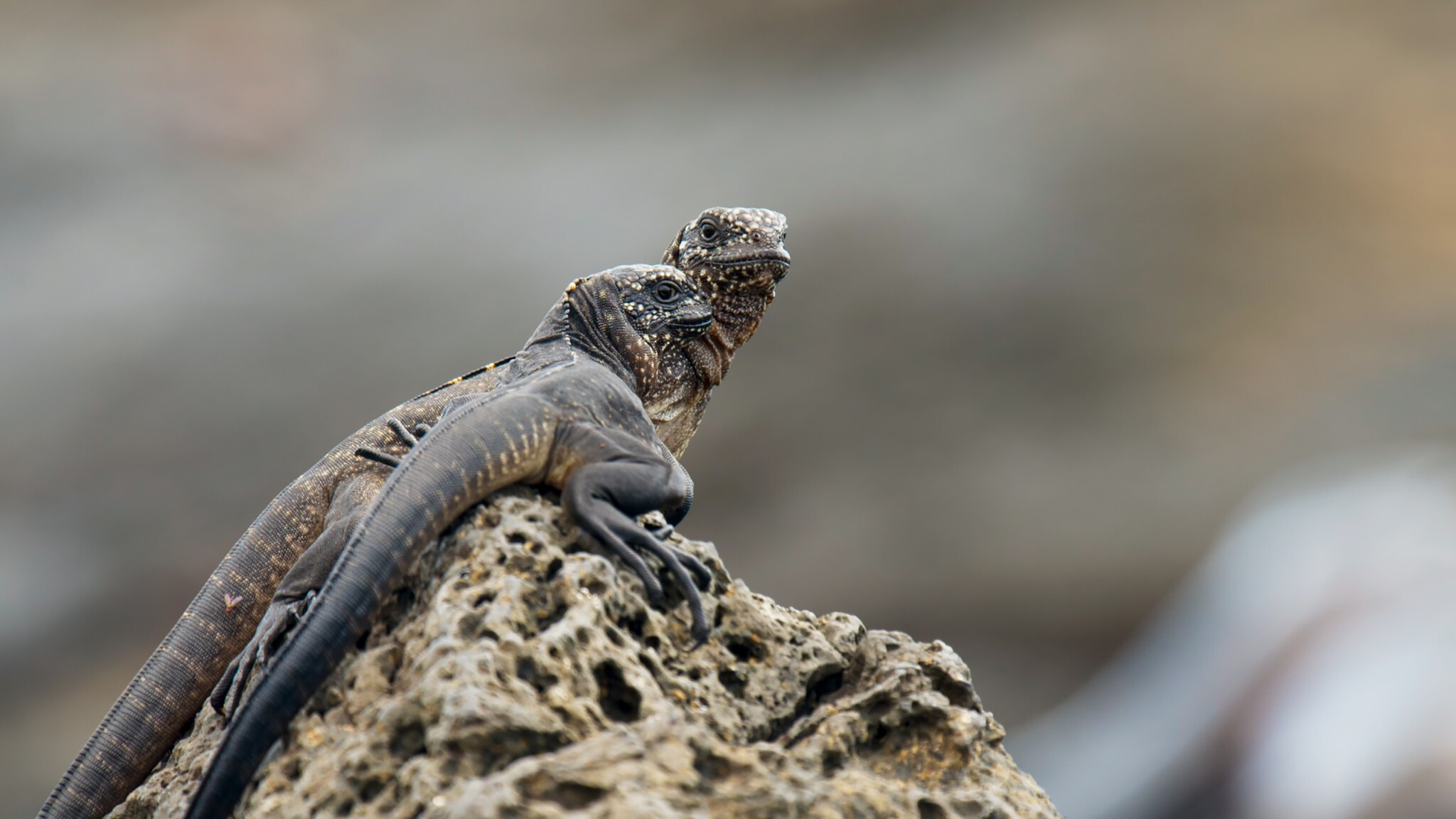
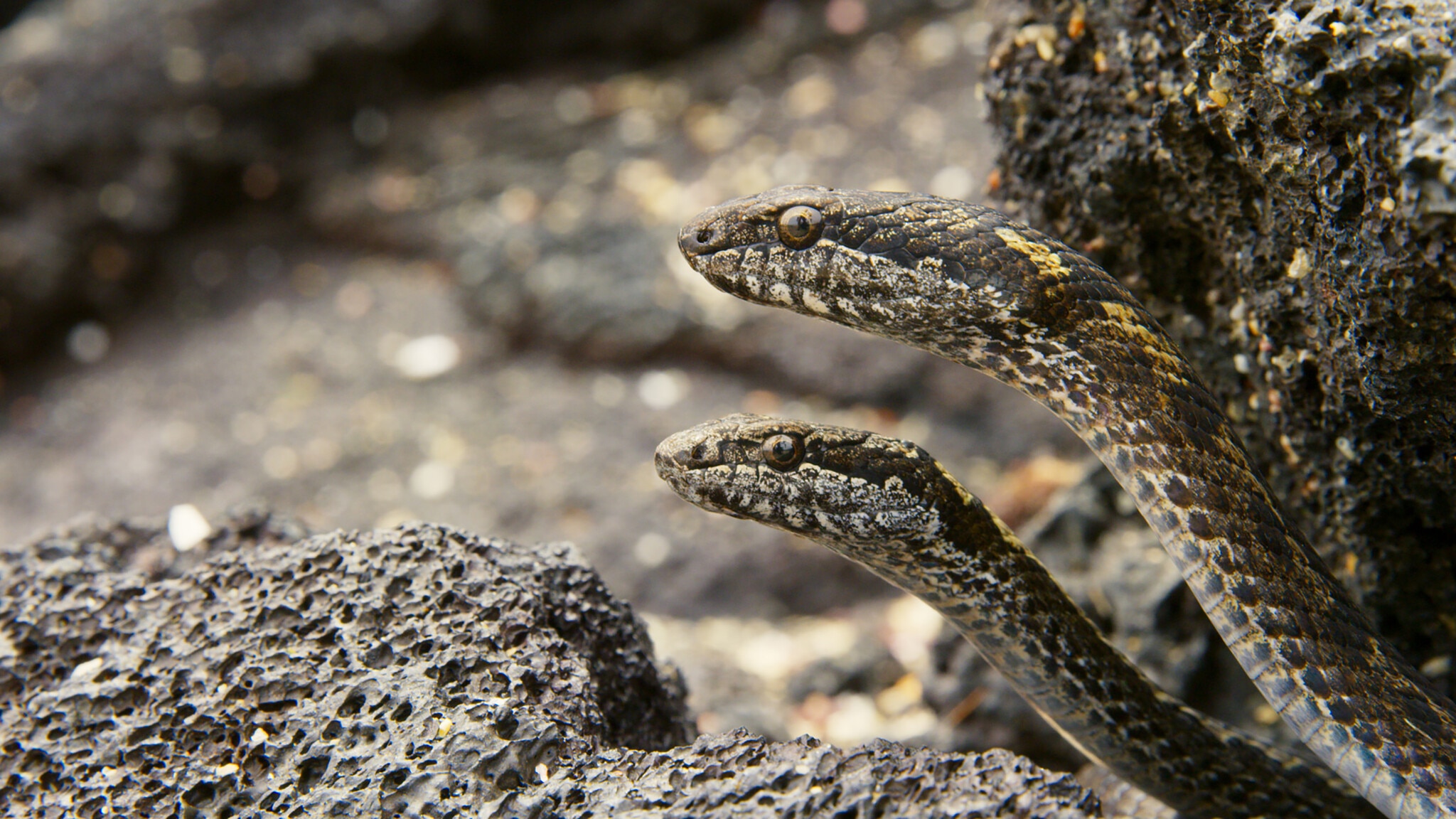
Snakes don’t usually hunt in packs. But when newly hatched marine iguanas began emerging from a rocky beach on Isla Fernandina in the Galapagos, nearby racer snakes responded en masse. At high tide, the baby iguanas had to pass this ravenous gang of predators swarming in a wall of volcanic rocks to reach the sea’s edge. 

“It was a bottleneck on the beach, and as the tide came higher, that funneled them past this wall, and that's where all the snakes were waiting—they knew,” says Planet Earth II director, Elizabeth White.

White’s small team of filmmakers captured hours of footage of iguanas running this gauntlet - the stars of what ultimately became one of the most gripping, viral sequences of the Planet Earth series. It was the first time a group of snakes was captured on film hunting marine iguanas. But that was not what the team had expected. 

Article continues below
Planet Earth II

More on Nature

Sorry there is no content available for your region.

Intention vs reality

They came to the island with the intention of filming a snake hunting an iguana one-on-one. The cameraman, Richard Wollocombe, had previously filmed the scenario on the rocky shoreline - where snakes hide out in holes, ready to catch baby iguanas on the way to the sea. When the team saw an iguana emerge from the sandy beach and suddenly face a horde of snakes, the plan changed. The web of snakes that sprang from what they nicknamed “the wall of death” was wholly unexpected.

“We go out on location hoping to film a particular piece of behaviour” says White. “But what actually happens, what nature throws at you when you're there, you just can't quite predict.”

“I remember getting there and thinking, this is like Indiana Jones. Suddenly snakes appearing everywhere. When they all come forward and you're thinking, why are they like this?” says Jonny Keeling, head of BBC Studios Natural History Unit, who executive-produced the sequence. 

"What nature throws at you when you're there, you just can't quite predict."

The predators

It may look like they’re hunting as a pack, responding in unison to their prey’s movements, but that’s not typically in a snake’s nature.

“Hunting in packs would be very unusual behaviour for snakes; I think it is highly likely that we are seeing competition between the snakes for the iguanas in this footage,” says Amy MacLeod, zoologist and founder of a marine iguana conservation project, Iguanas from Above.

It might seem strange for newborn marine iguanas to have to immediately run for their lives, but they’ve evolved to do so over thousands of years. The mothers bury their eggs in the sand near the beach, where they incubate for three months. Once the babies hatch, they often lie right under the sand, waiting for the right time to run toward safety above the volcanic rocks.

“On Fernandina Island, conservation threats are minimal, so larger numbers of both marine iguanas and snakes exist there,” says MacLeod. The iguanas are well-adapted to evade snakes, but the massive gang of snakes we see in Planet Earth II was a different story. They’re a menacing obstacle, and because the camera puts us at the iguana’s level, their fear is palpable. 

Baby marine iguanas prepare to run the gauntlet of racer snakes in 'Planet Earth II'.

A different perspective

That point of view is what makes Planet Earth II unique. Unlike Planet Earth I, which features grand, sweeping shots of the terrain, the second series drops us right into the animals' world. That level of immersion was possible thanks to new camera tech like macro probe lenses and super lightweight handheld camera stabilisers, like the Ronin.

White capitalised on it while filming the snakes and iguanas sequence. “We made a particular effort to get down on the iguanas' level”.  That’s why the snakes feel huge even though they were quite small. White says they’d struggle to bite your big toe.

“At that point, a lot of these amazing gyrostabilised systems had come out,” says White. These allowed the cameraman to move with the action and maintain a steady shot. “Some people throught we’d filmed using a drone, but the iguanas are small, so a hand-held gimbal gave quite a good view from up above them”.

We needed to see some that didn't survive in order to understand how amazing it is when one does

One major obstacle, however, was that the beach itself is protected, and the camera team weren’t allowed to set foot on it. So the shoot was a balancing act between one stationary cameraman on a long lens and the other on the move around the edges with the gimbal.

“The long lens cameraman would position himself down where the rocks started to funnel the iguanas towards the sea – where the snakes hung out,” says White. “The other cameraman [was] free to move, but he had to keep to the edges of the beach. So it was quite a task.”

They had help from a local park ranger who kept a lookout for hatchlings on binoculars, but the crew couldn’t always get in position quickly enough. “The hatchlings can go in any direction they like, so there were a lot of instances where we tried to follow them, and they just disappeared.”

Many baby iguanas ultimately did not escape the treacherous passage, and the film crew could only stand by, watch, and record. White often stifled small screams as the hatchlings unwittingly walked towards the snakes. But it was necessary footage to capture.

“We needed to see some that didn't survive in order to understand how amazing it is when one does” says White.

“You go with a naivety and curiosity, and then it happens, and you're like, ‘oh god, that's quite traumatic.’ I much prefer it when an animal gets away,” admits Keeling. 

Racer snakes prepare to strike in 'Planet Earth II'.

In the edit

After weeks of watching this behavior whilst living on a 100-year-old pirate ship with the Wolf Volcano erupting in the background, the crew came home with many hours of footage.

“You go with a very distinct shot list of all the bits you need in order to tell the story, but it takes on its own organic life, both in the field, and then when you come home and actually watch it,” White says. They knew the iguana that made it over the “wall of death” was their hero, but it’s a confluence of components that keeps us locked into the scene until the very end.

To amp up the suspense, the action is harmonised with Jacob Shea and Jasha Klebe’s gripping score. David Attenborough’s narration offers just enough support but gives the spotlight to the scene.

The resulting under-five-minute-long scene captivated the world. Over the past decade, this unforgettable sequence has had over 400 million views across social media, even though reptiles aren’t the most beloved creatures. We’re seeing life from the marine iguanas’ point of view, so we relate in a way we might not otherwise.

“A lot of what we do is visualise how remarkable they are, because often their struggles and their tactics are just like superpowers,” says White. “That's what we always look for in storytelling: things that will make people feel some sense of connection.”

Find out where to watch Planet Earth II where you are.