Advertisement Feature

Exploring Kenya’s cradle of humanity in an electric Skoda Enyaq vRS

For millions of years, people – and our ancestors – have been moving around Africa’s Great Rift Valley. It’s thought to be one of the first places on Earth where we stood up and began to walk, so you could call it the birthplace of human mobility itself. 

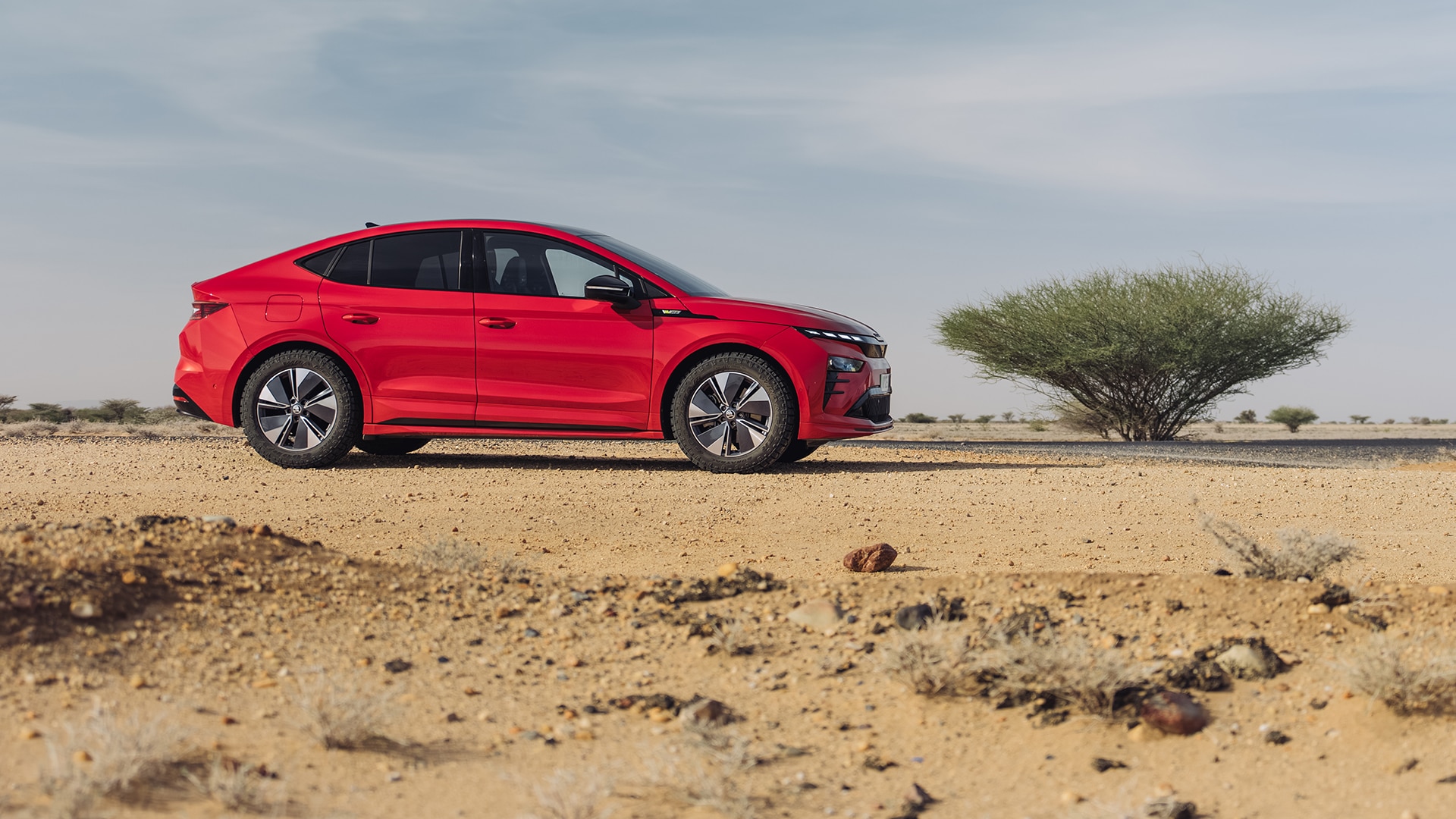
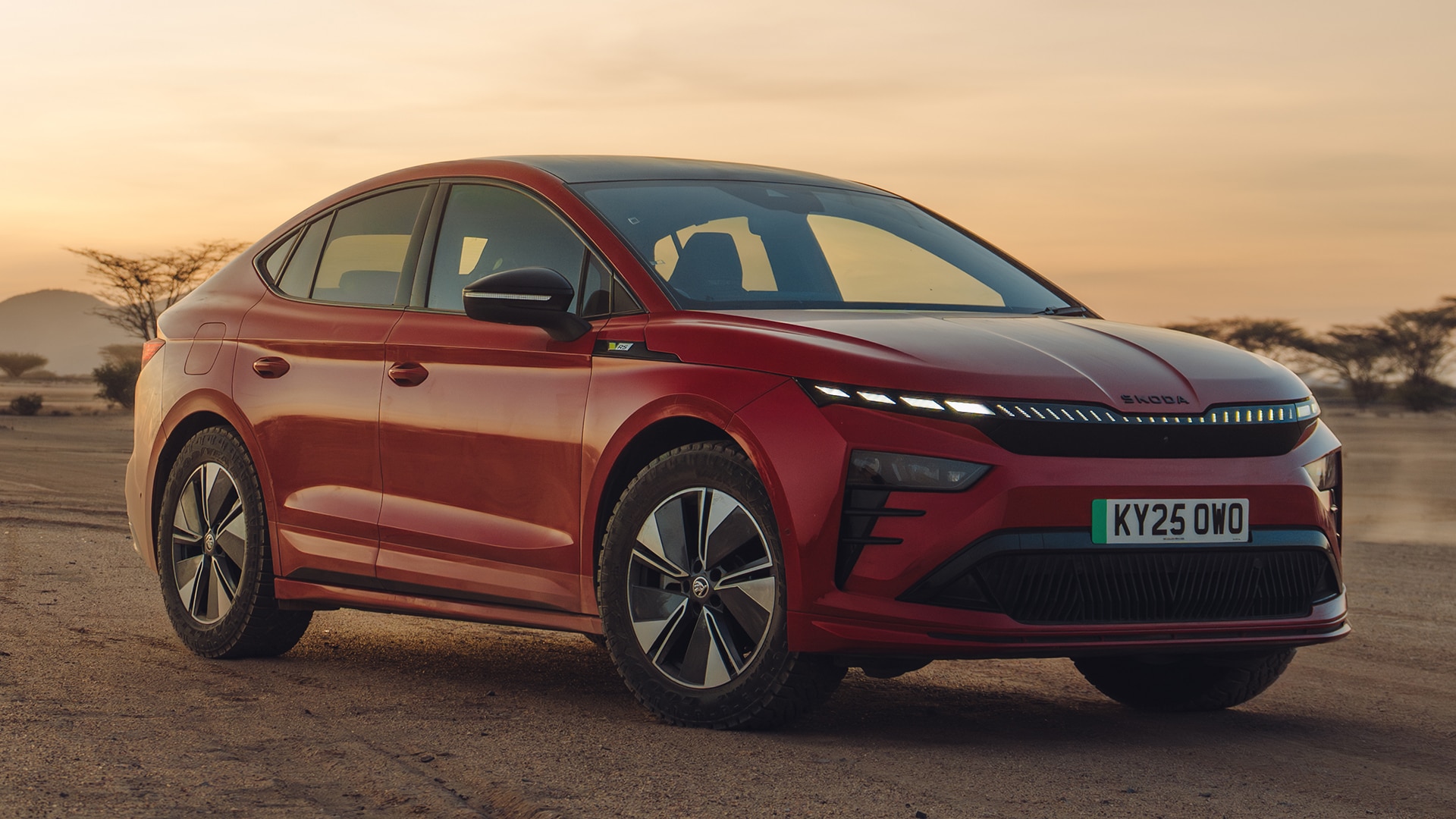
But what would our predecessors have made of our transport today: a fully electric Škoda, zipping quietly across the dusty plains, a futuristic red streak across this ancient landscape. 

Article continues below

The Enyaq Coupé vRS is the latest, hottest version of Škoda’s electric SUV – for a world where EVs are always evolving. But there’s another reason we’ve brought it here, to northern Kenya. The name. ‘Enyaq’ is derived from the Gaelic word for ‘source’ or ‘essence’. And this part of the world, for our species at least, is one of the most essential sources of all.

Here, time is written into the earth itself. This landscape has produced some of the most vital evidence not just of animal life, but of human origins. For decades, scientists have come here to understand where we began. And we’ve come to meet them as they continue to piece that story together.

Human origins

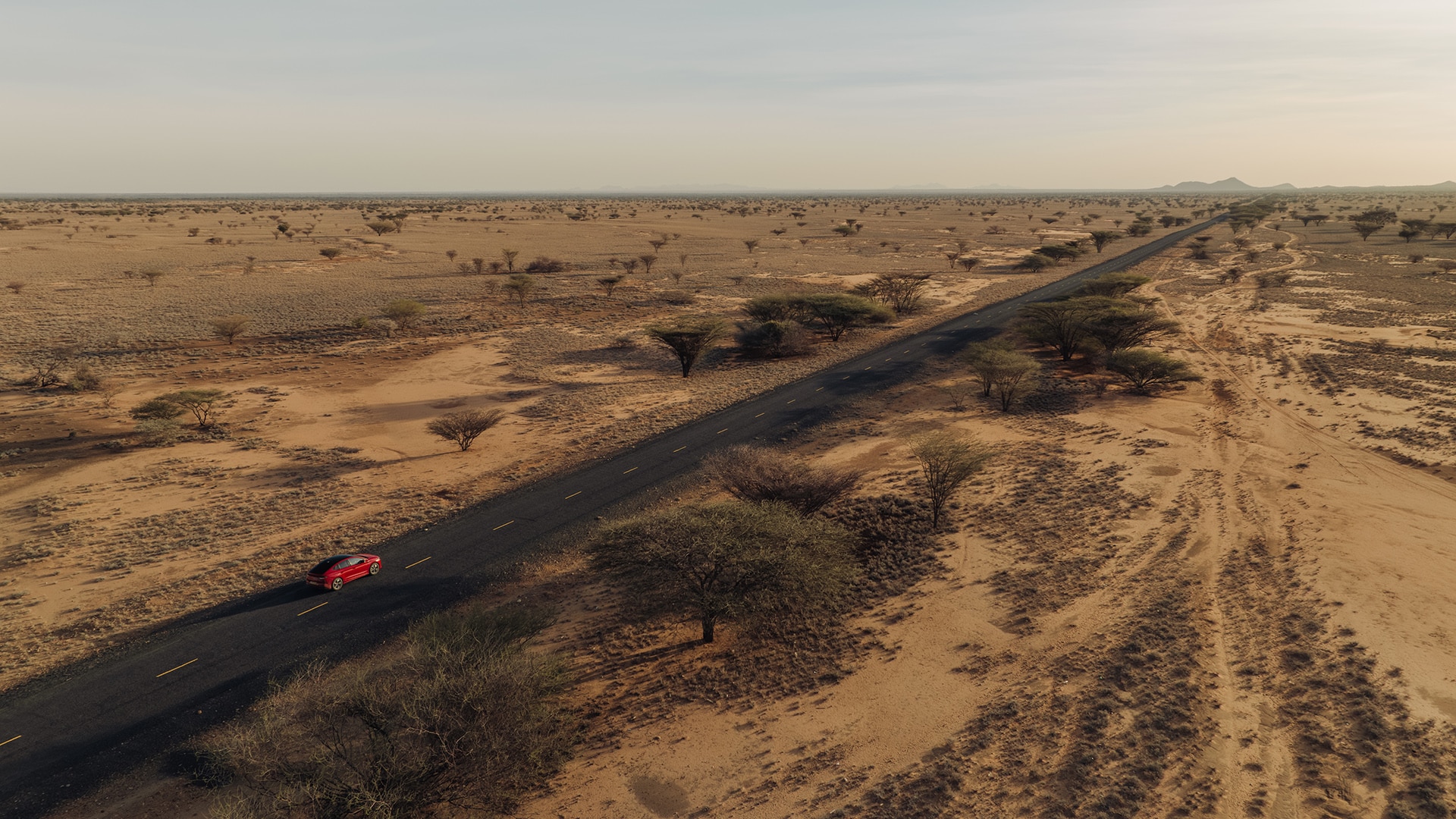
We begin our drive in Lodwar, the largest town in the region and a hub for people and trade. We head east, on one of the few stretches of tarmac road in this remotest of regions, where distances are vast and horizons seemingly out of reach. The vRS delivers 340 PS and takes you from 0-62 mph in 5.4 seconds – performance that suddenly shrinks those distances.

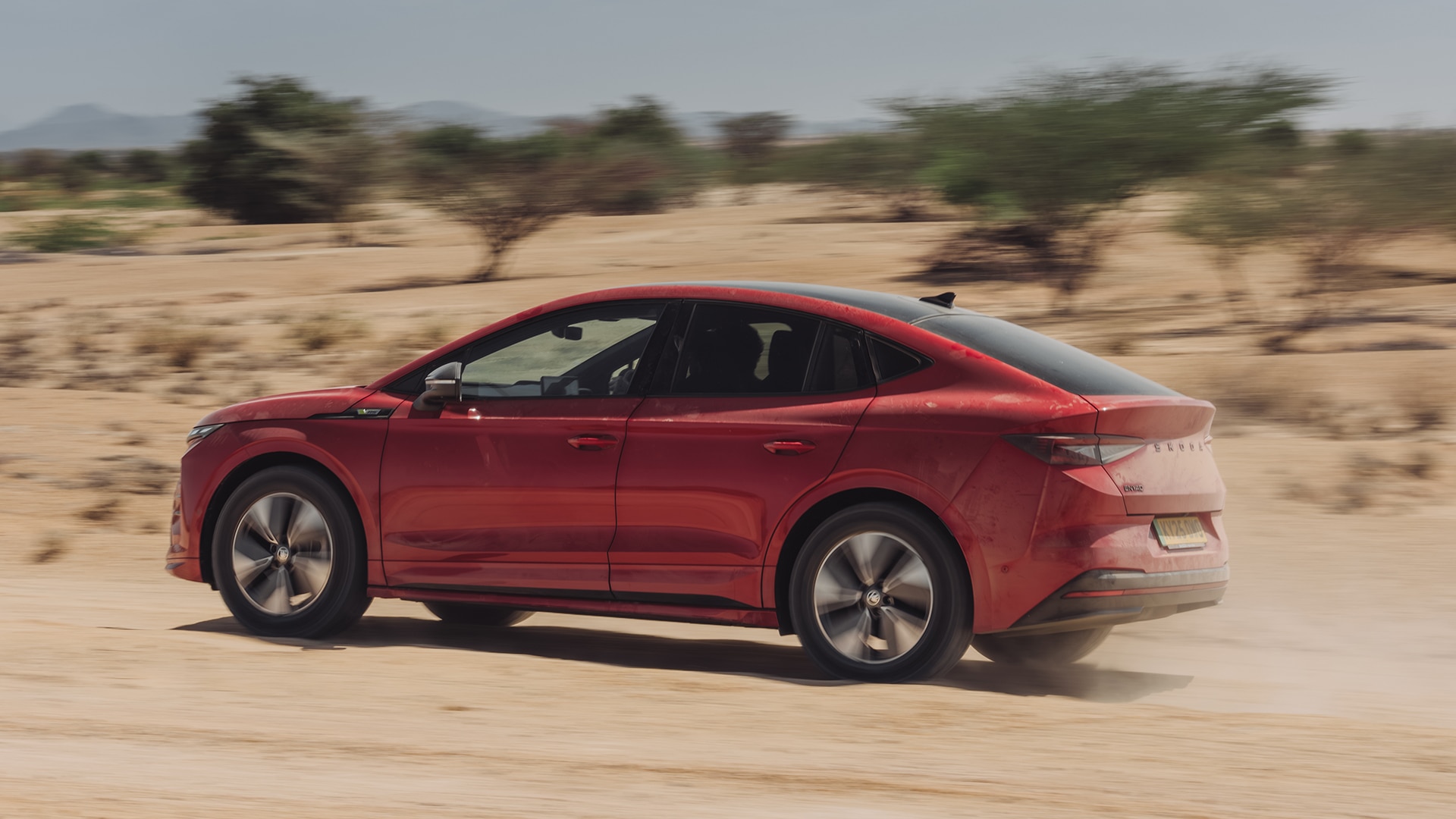
But it’s not long before we run out of road, swapping the tarmac for sandy tracks. Electric all-wheel drive gives reassuring traction on loose dirt and broken ground – helped by some all-terrain tyres (the only modification we’ve made for this trip). Dynamic Chassis Control with 15 selectable levels of adjustment helps to smooth out ruts and washboard ripples.

Following the Turkwel River as it meanders along its age-old route, we reach our first stop: the Turkana Basin Institute (TBI). Founded in 2005 by the late, legendary paleoanthropologist Richard Leakey, the TBI supports long-term research into the evolution of humankind.

One of the few stretches of tarmac

“Some of the most important discoveries in human evolution have come from this region,” explains Carrie Mongle, a professor at Stony Brook University and an affiliated researcher at the TBI. 

The geology of the Turkana Basin makes this the ultimate archaeological archive. Shifting watercourses once rapidly buried bones in fine sediments, while volcanic ash layered the landscape, meaning it can be dated with remarkable precision. “Those layers mean the fossils are effectively sealed in time,” Carrie explains.

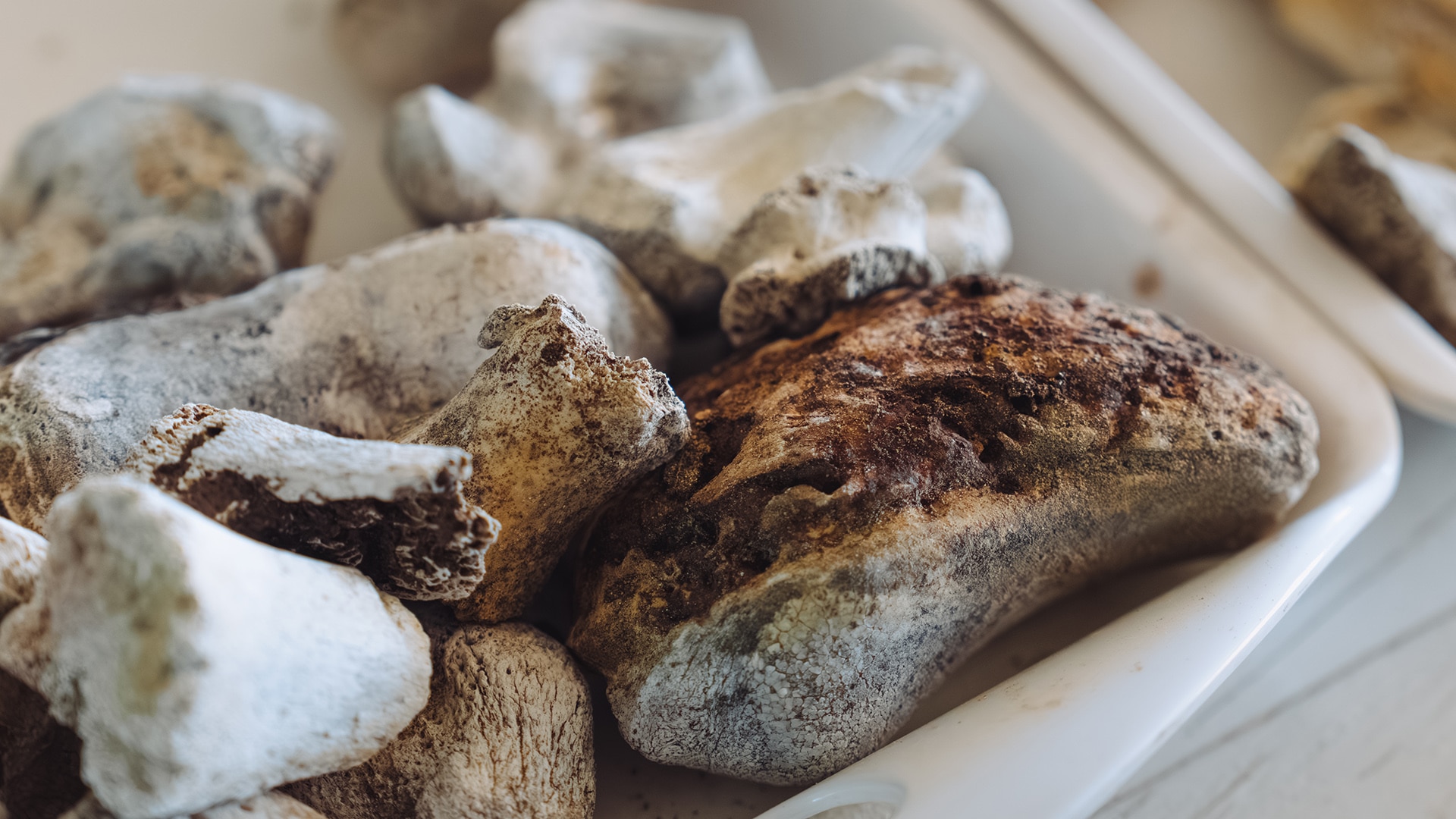
We join Carrie and her colleague Francis on a mini fossil hunt. Gently scuffing his boot into the sand, Francis disturbs a charcoal-coloured cylinder of stone. He picks it up, rubs the dust away with weathered hands – hands that have spent a lifetime scraping this ground – and announces: “hippopotamus bone.”

Skoda Enyaq vRS

Not unusual, perhaps. Nearby Lake Turkana is home to a substantial hippo population. Then comes the follow-up. “Probably over two million years old.” He places the fossil back on the ground and walks on, while the rest of us stand still, exchanging looks of disbelief.

“We have deposits spanning back 20 million years,” says Carrie. “That allows us to track changes in anatomy, behaviour and environment over an extraordinarily long period – all within a single region.” Very few places in the world offer that kind of continuity. Here, evolution isn’t a series of snapshots, but a long, connected story unfolding across deep time.

Leaving the TBI, the scale of the area becomes clear. Distances are vast. Settlements are sparse. Temperatures regularly approach 40°C. The land is dry and unforgiving.

Skoda Enyaq vRS

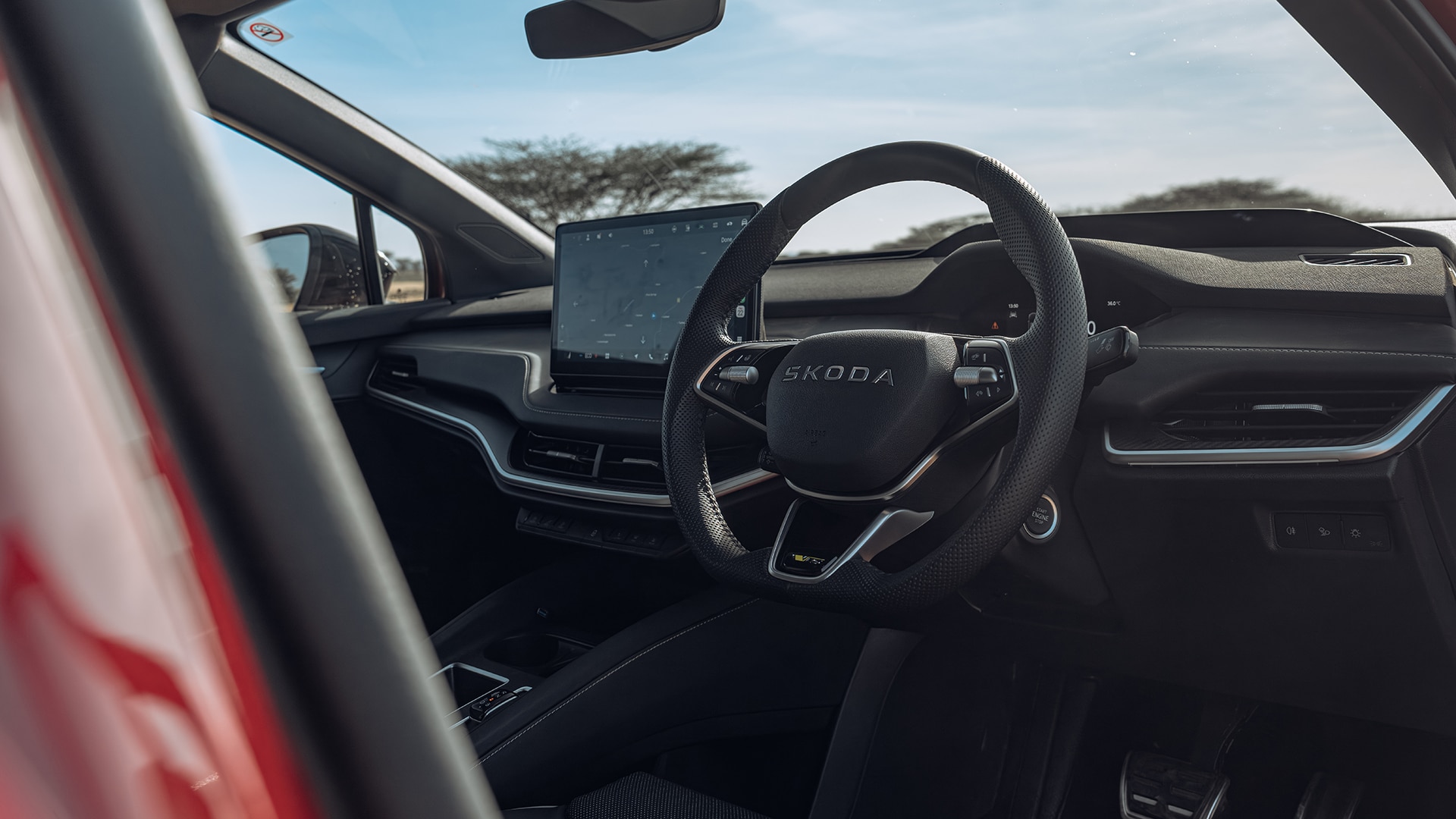
Out here, the Enyaq becomes a life-support machine. The cabin is calm and cool – no need for heated seats today, nor the umbrella neatly tucked into the door (small reminders of the Enyaq’s everyday life far from here). In bespoke vRS interior Design Selection there are ventilated lsports seats, and the digital cockpit glows with modern graphics, a futuristic contrast to the landscape outside.

There are no roadside rapid chargers here, but electric driving is still possible. Using a three-phase power supply – the kind found in workshops and warehouses – and a Juice Booster 2 adaptor, the Enyaq charges at 11 kW. 

It’s a solution that works almost anywhere in the world. A full 84 kWh battery gives us enough range for a day’s driving, even in these tough conditions. With a rapid charger we could up that to speeds of up to 185 kW – enough to go from 10-80% charge in about 26 minutes.

Skoda Enyaq vRS

Topped up, we turn north. Nearby are the sites where the world’s oldest known stone tools were discovered, at 3.3 million years old, and where Turkana Boy was found in 1984: the most complete Homo erectus skeleton ever discovered. It is a story that brings us full circle. Francis, our hippo-bone discoverer, was himself involved in the excavation as a child.

At Kalokol, a fishing community on the lake’s edge, the air is filled with sound from a distant time. Hammers strike wood, saws cut through planks, planes send wood shavings flying like confetti. There are no power tools, just traditional boat-building skills passed down through generations. Fish are laid out to dry in the sun. Storks and egrets wade in the shallows. And children splash in the reed beds, confident that crocodiles won’t venture in until sunset (Lake Turkana is home to the world’s largest population of Nile crocs).

Skoda Enyaq vRS

Continuing our quest, and with the Enyaq confidently tackling ever-more demanding tracks, we reach the giant, golden hills of the Natong’obong’ sand dunes. The Enyaq drives straight up the steep slopes, all-wheel drive and instant torque making easy work of the soft surface (and with a dedicated Traction mode helping to manage the grip).

On the other side of the dunes, we meet a community of Turkana tribespeople whose welcome is as warm as the desert sunshine – and whose pastoral way of life has changed little over millennia.

“Modern humans only emerged around 300,000 years ago,” Carrie reflects. “When you study fossils that are millions of years old, you realise just how briefly our species has existed.”

The Turkana Basin offers a window back into humanity’s past – a reminder of where we began, and of the ingenuity and resilience that allowed us to survive. The Enyaq, quietly crossing this ancient landscape on electric power, is a reminder of how far we have travelled as a species – and a glimpse of the future we’re beginning to shape.