Blue Planet II

How Blue Planet II Turned Filmmakers Into Deep Sea Explorers

By Ally Hirschlag

The minds behind the 2017 series look back on what it took to share the world beneath the waves...

Producer Orla Doherty was preparing to film an episode of Blue Planet II, below the rough, frigid waters of Antarctica, when her submersible suddenly sprang a leak.  

“One of the seals had shrunk because the water was so cold, and water was beginning to come in,” says Doherty.  

Their plan to go 1,000 meters down, the deepest a crewed submersible had ever gone in the Antarctic Ocean, was in jeopardy. Thankfully, her crew included ex-British Navy divers who had trained their entire careers for such a moment. Within 20 minutes, they’d gotten it under control.  

“I'm not going to say my heart didn't start to race because it did,” remembers Doherty. While that experience would’ve sent most people racing back to the surface, she and her dauntless team decided to carry on filming for another eight hours.
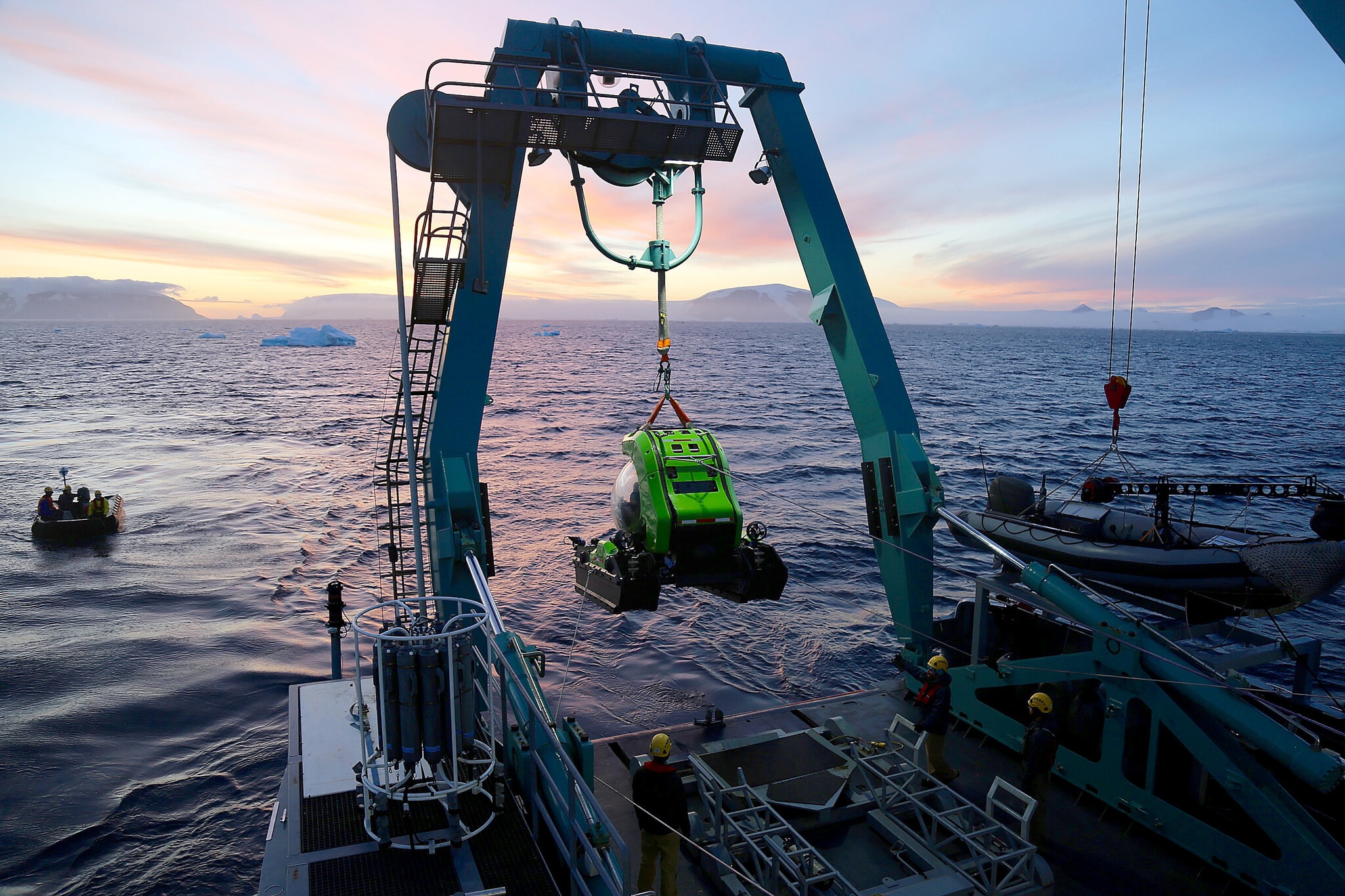
BPII Submersible
A submersible used in the creation of Blue Planet II.
Article continues below
Blue planet

More on Nature

Sorry there is no content available for your region.

Over the past 25 years, the Blue Planet series has captured aspects of the ocean scientists had only dreamed of because of moments like this. Nine years ago, Blue Planet II showcased the cannibalistic tendencies of Humboldt squid, giant trevally fish launching out of the water to snatch seabirds mid-flight, and an orca feeding frenzy from the orca’s point of view. The efforts of filmmakers-turned-explorers gave us front-row seats to these never-before-seen behaviors and worlds as foreign as outer space. 

The Deep

The deep sea, which begins 200 meters below the surface, is the planet’s largest continuous habitat, but few have ever explored it. Doherty spent hundreds of hours on a submersible filming 'The Deep', the Blue Planet II episode that features the life that occupies those pitch-black waters.  

Filming activity where there is no natural light was the challenge, one that Doherty’s team readily accepted.    

“We spent a lot of time developing cameras,” she says. “We were in that early wave of 4k, and certainly 4k in the deep sea was new.” She created a spreadsheet filled with camera lenses and housings in an attempt to build an ideal system for that environment. “We knew that we would see things that probably hadn't been seen before and certainly wouldn't be seen again in our time frame,” she recalls.

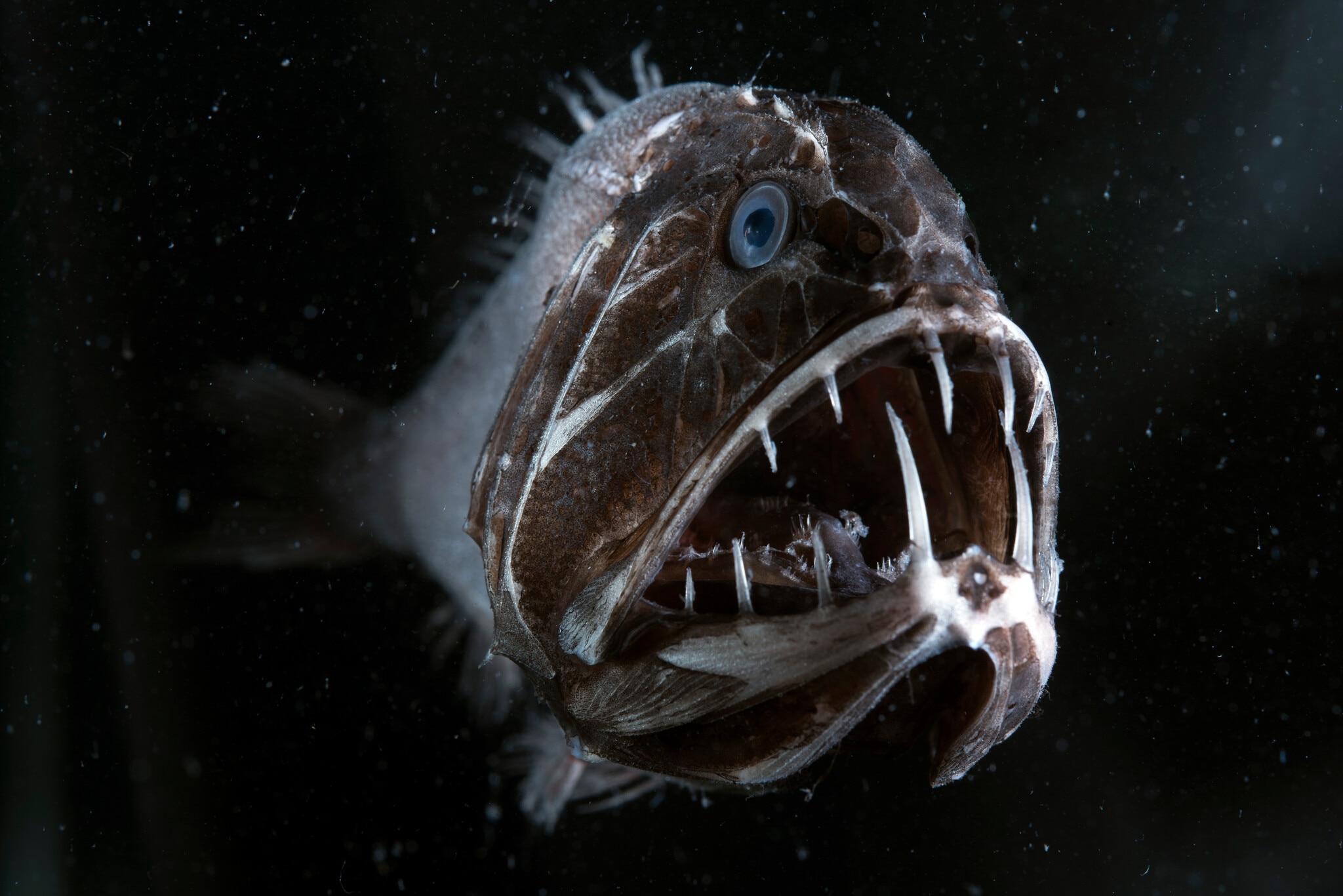
BPII Fangtooth
A fangtooth, as appears in Blue Planet II.

They ended up designing two cameras, one for wide angle shots and one for close ups, which they could use simultaneously.

“We had cameras coming online that [allowed us to] really film in the dark, so we could be like a stealth machine, like a deep-sea animal,” says Doherty. “We could see how deep-sea animals saw, and that meant that we could capture bioluminescence.”

The cameras’ sensors were particularly important for that.  

“You want your camera sensor to be as sensitive as possible, so that you can use as little light as possible in case your light is disturbing the animals,” says Doherty. That technology evolved over the four years they were filming Blue Planet II “so there were things that we could do by the end that we definitely couldn't do at the beginning.” 

“We could see how deep-sea animals saw, and that meant that we could capture bioluminescence.”

To protect the cameras from the pressurized environment, they housed them in titanium. The cameras were put on pan and tilt mounts so they had lots of flexibility. Sometimes, the sub pilot and camera op worked together, coordinating like dance partners to land the shot.  

Their lighting style was rather different from anything scientists had used in the deep sea. “They just want car headlights on so they can see everything, and that's great for science. But my God, it's ugly to watch,” says Doherty. “We were building scaffolds, bringing them in arms and just trying to make a great big spread between our lens and our light.”

She saw several unprecedented behaviors while filming 'The Deep', but one that’s stuck with her is the Humboldt squid fight over a carcass of one of their own near the Chilean seaboard.  

“Next thing we know, we're watching a squid come into frame, and it's got another squid in its tentacles. We knew that Humboldt squid can be cannibalistic. It's one thing to know that. It's another thing to see it,” recalls Doherty. Suddenly, another squid lunges forward, and the two start having a tug of war over the dead squid. “It was just the most surreal, extraordinary thing to witness,” she says.  

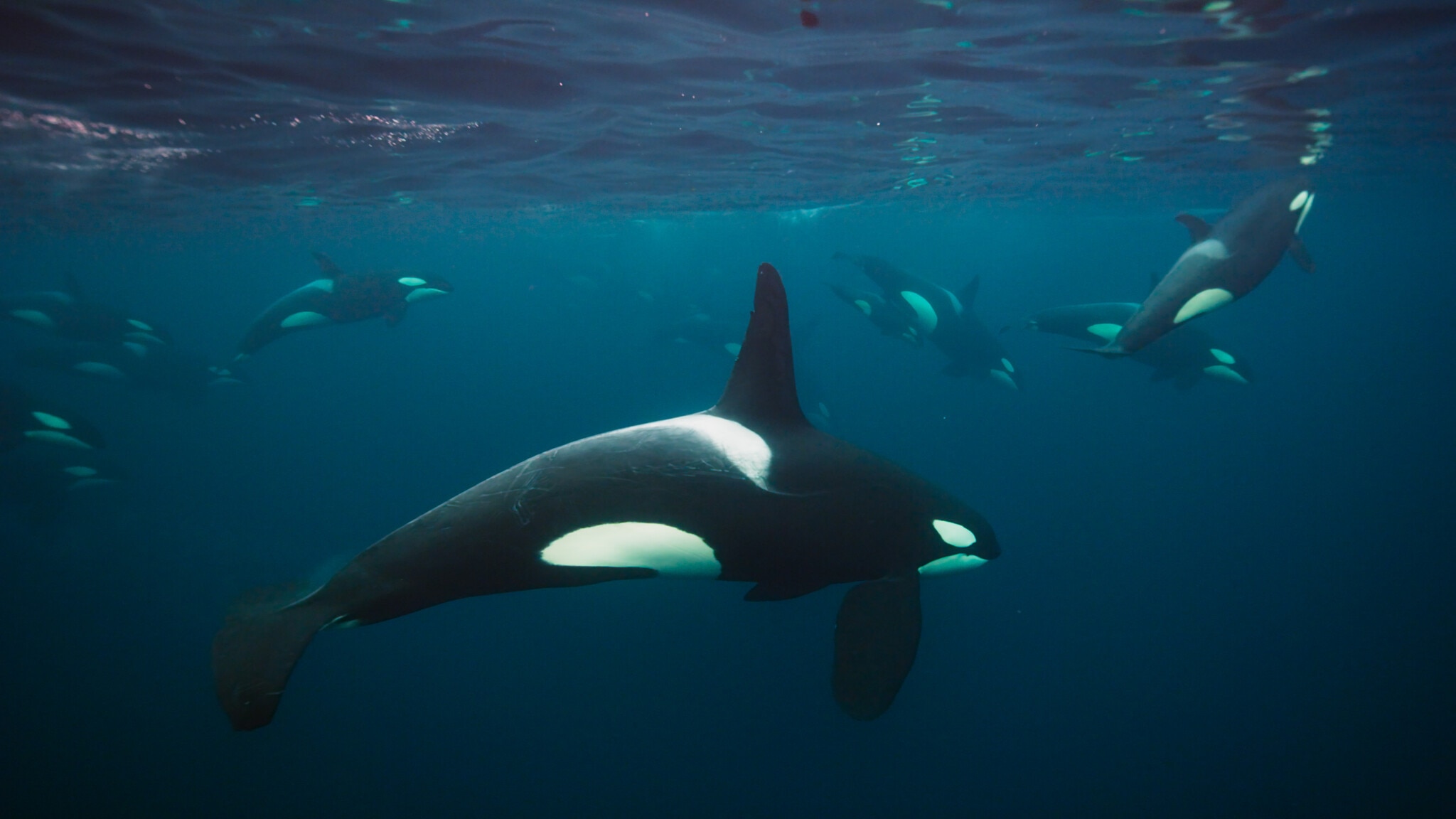
Blue Planet II Orcas
Orcas captured on film in the making of Blue Planet II.

From an Orca’s POV  

Meanwhile, at the other end of the world, lead scientist Eve Jourdain was researching orca feeding behavior in the Norwegian Fjords in 2015 when she ran into a BBC film crew. They were attempting to deploy camera tags on humpback whales for a sequence in Blue Planet II where humpbacks and orca come together to feed on herring. 

“I think we shared a dinner one of those evenings, and they started kind of challenging us, asking how hard it would be to deploy camera tags on killer whales. My partner actually said, ‘Well, how hard can it be?’”  

Shortly after that, the BBC contracted them to do just that the following winter.  

Jourdain remembers tagging the orcas with these 4k cameras attached to suction cups was surprisingly straightforward. “When there's plenty of food and the animals are packed together, very busy during the feeding, then you can easily drift in there with your boat without being invasive,” she says. 

“There were so many whales, and they were just carousel feeding around the boat. They don't mind your presence at all.” 

Since this was the first time anyone had attached a hi-res camera to a whale, there were some hiccups. Sometimes, the camera would slip down, resulting in an unusable angle. And, when the tags naturally detached after a few days, they had to find them quickly, otherwise they could float and drift.  

When BBC producer Jonathan Smith saw the retrieved footage, Jourdain remembers he was blown away. It showed thousands of herring swirling and dividing across 25 meters while dozens of orcas corralled them, all from an orca’s point of view. So he made a pivotal call.    

“‘We need to change the story,’ [he said]. The focus initially was on humpback whales. But because of the footage we got, they swapped that to be more from the killer whales’ perspective,” she says. 

At the Surface 

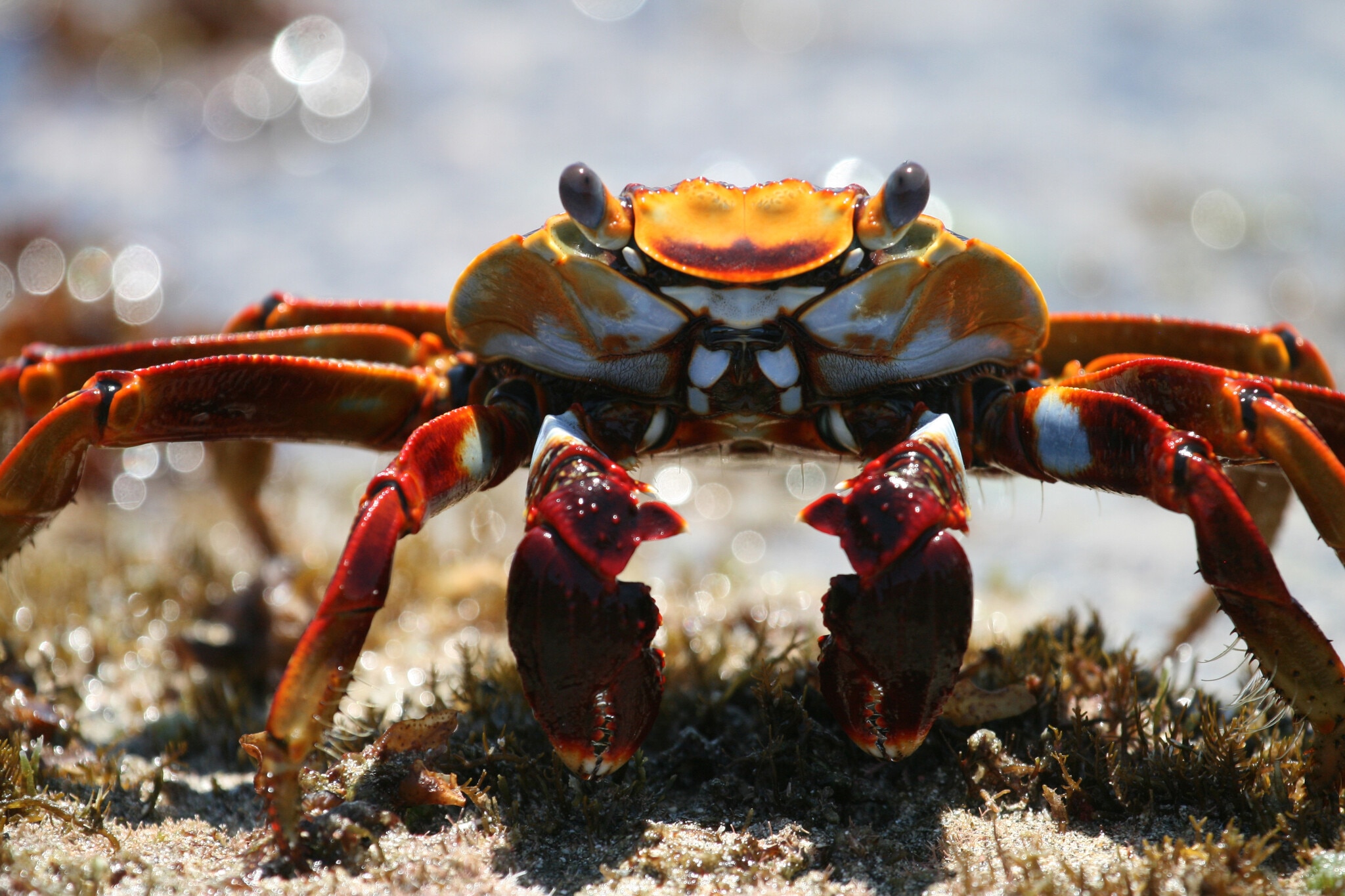
Extraordinary behaviors were also captured at the water’s edge. On Brazil’s rocky coastline, Sally Lightfoot crabs flit across the intertidal zone to reach their feeding ground. They barely touch the surface of the water as they scuttle across, hoping to avoid the chain morays waiting just below.  

“Quite a few of the crabs were carrying the scars of previous encounters, with missing limbs and other war wounds,” says Will Ridgeon, who helped produce The Coasts episode. The crabs were quick and skittish, so at first the crew followed from a distance, using a 1000mm lens. But they needed to get closer to capture the action, so they attached a small tripod with a RED camera to a lightweight rig they built. 

They had a small window to shoot the hunt when the tide went out. It took weeks of observation to learn the crabs’ routes and where the morays were waiting for them. But the eels liked to change things up.  

BPII Sally Lightfoot Crab
A Sally Lightfoot crab (Grapsus grapsus), as seen in Blue Planet II.

“The morays can actually leave the water, crossing the dry rock to reach another hunting ground,” says Ridgeon. “That made it incredibly difficult to predict where they were going to appear next, and we were constantly having to reposition ourselves.” 

The heavy surf and slippery rocks also made it difficult to keep up. But it was worth the effort.  

“The attacks were unbelievably explosive, and the crabs were much stronger and more resilient than I’d expected,” recalls Ridgeon. “The moray has to get its bite in just the right place on the crab’s carapace. If it grabs hold of a leg instead, the crab can actually wrestle with the eel and, amazingly, eventually jettison the limb to make its escape.” 

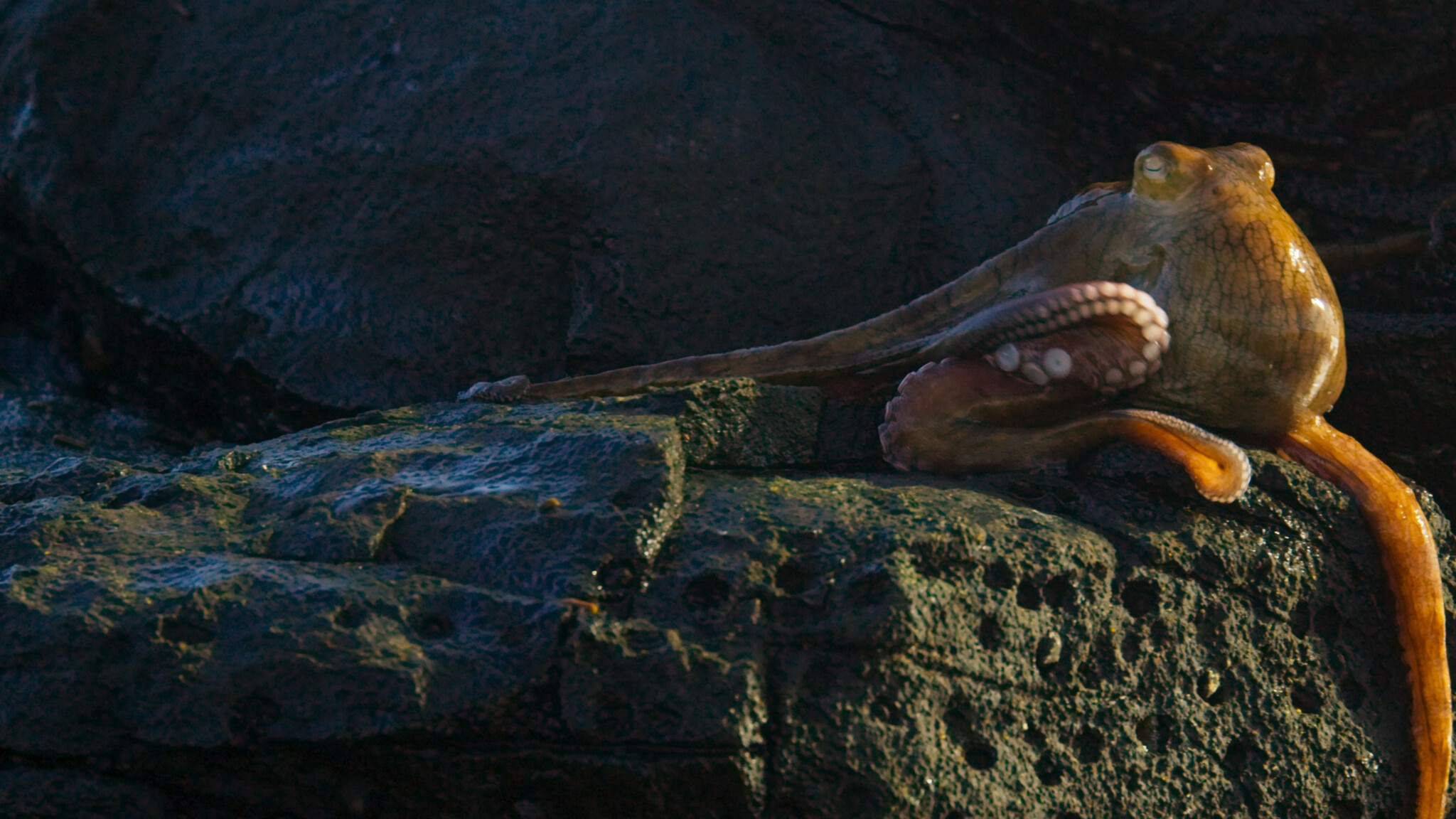
Then, suddenly, there were octopuses. “If you accidentally walked too close to one of their holes, they would launch themselves straight at you,” which is exactly what happened to Ridgeon. Whilst crouching low to film, one shot out of the water and wrapped itself around his arm. “It then seemed to have absolutely no intention of letting go.” 

BPII Octopus
An octopus as seen in Blue Planet II.

The Future of Our Blue Planet 

After all of the drama, Blue Planet II ends with a poignant message about the human impact on marine life. From overwhelming plastic pollution to climate change, we’ve caused devastating habitat destruction that may be irreversible in some ways. But by shining a light on that along with successful conservation efforts, the series had genuine impact, positively affecting people’s attitudes and behaviours around single use plastics and even being even being name-dropped by the UK’s Chancellor of the Exchequer in his 2017 Budget speech.   

“There is still so much storytelling to be done about the ocean,” says Doherty. And despite decades of exploration, much of our blue planet remains unknown. In the next chapter of this incredible series, Blue Planet III, filmmakers and scientists continue that story, pushing deeper into the ocean than ever before to capture extraordinary new behaviours and discoveries that show the age of ocean exploration is far from over. 

Find out more about this next chapter and where to watch Blue Planet III where you are.