Planet Earth

How Planet Earth Changed The Way We See Nature

By Ally Hirschlag

Twenty years ago, Planet Earth gave us an unprecedented view of the world. But behind every incredible shot were crews spending weeks waiting in the dark, scientists who followed animal behaviour like scripture, and a production that rewrote the rules of documentary filmmaking.

A starving lion pride in Botswana orchestrating an attack on an adolescent elephant in the dead of night. Birds of Paradise species practicing intricate and entirely unique mating dances in New Guinea. An undulating flow of caribou evading starving wolves in the Tundra from overhead.

Scenes like these embody Planet Earth’s tagline: ‘As You’ve Never Seen it Before.’

Article continues below
Planet Earth

More on Nature

Sorry there is no content available for your region.

When Planet Earth premiered 20 years ago, millions of people got to see aspects of the world that had largely remained a mystery. This new perspective was largely thanks to intrepid film crews, fearless researchers, and technology that was revolutionary at the time.

“The style of it had never been seen before, and a lot of it was shot from the air,” says Justine Evans, a camera op who worked on all three Planet Earth series.

“Cineflex on the helicopter was brand new for us,” said Planet Earth director/producer Chadden Hunter, referring to the gyro-stabilised aerial cameras. “News crews and police had it, but never had a documentary film crew. So many shots are from the air, and at the time, nobody had seen a rock steady shot zooming in on a wolf as it hunted.”

Those astonishing shots were just one aspect of the storytelling that made Planet Earth a cinematic benchmark. The rest was a confluence of surgical planning and execution, and seemingly endless patience wrapped in Sir David Attenborough’s captivating narration.

Planet Earth
©Chadden Hunter

The Planning

Hunter describes planning a single episode like “an absolute sculpture that has to be looked at from multi[ple] dimensions”.

There are several filters he has to consider when crafting the story.

“We had our whiteboards covered in all sorts of story ideas,” he says. “You'd put on your taxonomy filter, and be like, ‘Oh, well, we've got a few big mammals. We've got too many bird stories. Gosh, do we have any kind of reptile or amphibian story here?’ Then there’s a tonal filter, an emotional filter.”

Achieving emotive storytelling, the kind that has you rooting for one animal or another, was the goal, and what helped was to begin to frame animals as unique characters that audiences could relate to.

That’s where Sir David Attenborough comes in. Hunter wrote scripts for Attenborough and recalls one where a serval cat was hunting a mouse in Planet Earth II. He had Attenborough say “warmer…warmer…warmer”, in relation to how close the cat was getting.  

“David not only enjoyed saying the lines, but he delivered them with this real Shakespearean gravel,” says Hunter. “He was willing to go on that journey and evolve his storytelling as well.”

That dynamism is key to keeping us invested in these animals. It’s also what sets us on an emotional rollercoaster when their lives are in danger. 

David not only enjoyed saying the lines, but he delivered them with this real Shakespearean gravel

The Execution

One such moment in Planet Earth takes place at night in northern Botswana when a group of lions goes after a young elephant that had wandered away from the herd.

A night hunt like this had never been captured before. Evans, who was a camera op on the shoot, managed it thanks to her experience with what was then relatively new film technology. They used infrared-sensitive cameras paired with infrared lighting that humans and most animals can’t see. That light reflects off the scene and back to the lens, creating a monochromatic shot. The lights were attached to the front of a truck and powered by its battery.

They were on location for over a month before they captured the infamous scene, and the waiting game was “incredibly hard, but also a mixture of exciting, exhilarating, and dangerous”, says Evans. It was also quite boring at times, she admits.

Planet Earth
©Chadden Hunter

“We went out with no prior knowledge of what would happen, apart from the stories that said that [the] lions, at a certain time of year when it's really hot and dry, are specialist elephant killers,” she explains. This is due to the drought season (August through November), making water and food scarce. The lions are desperate for food, and the elephants are vulnerable, crowding around shrinking water sources.

When the attack finally happened, it was “utter chaos”, said Evans. There’s a screaming elephant, lions growling mid-chase, and a nearby film crew trying to keep up in complete darkness. But that wasn’t the hardest part for Evans.

“It just took a long time for that elephant to die,” she recalls. “It's very hard to kill an elephant. That's the thing I wasn't prepared for. It came to a point where we were just waiting, just wishing for it to be over.”

In the end, however, Evans remembers it as a grounding experience. “Being challenged like that makes you accept what life is about. Life is full of complexities.”

You've got to get a line up above onto a branch. And you do that with a big bow and arrow. You shoot the arrow with a line on it

The Experts

Scientists and field assistants are the reason the camera crews can find and capture these unbelievable moments.

“They are the saints of our industry, those people who spend years and years studying animals and know intricate behavior, and can just be our encyclopedia,” says Evans.

Before Hunter was a director/producer on Planet Earth II, he was a research assistant on Planet Earth.

“I was a wildlife biologist who wanted to share my love of nature with people. So I thought I'd be a biology teacher,” says Hunter. “And what I discovered in filmmaking and by joining Planet Earth is being able to take my love of nature and share it with not just a classroom, but with millions and millions of people.”

Planet Earth
©Chadden Hunter

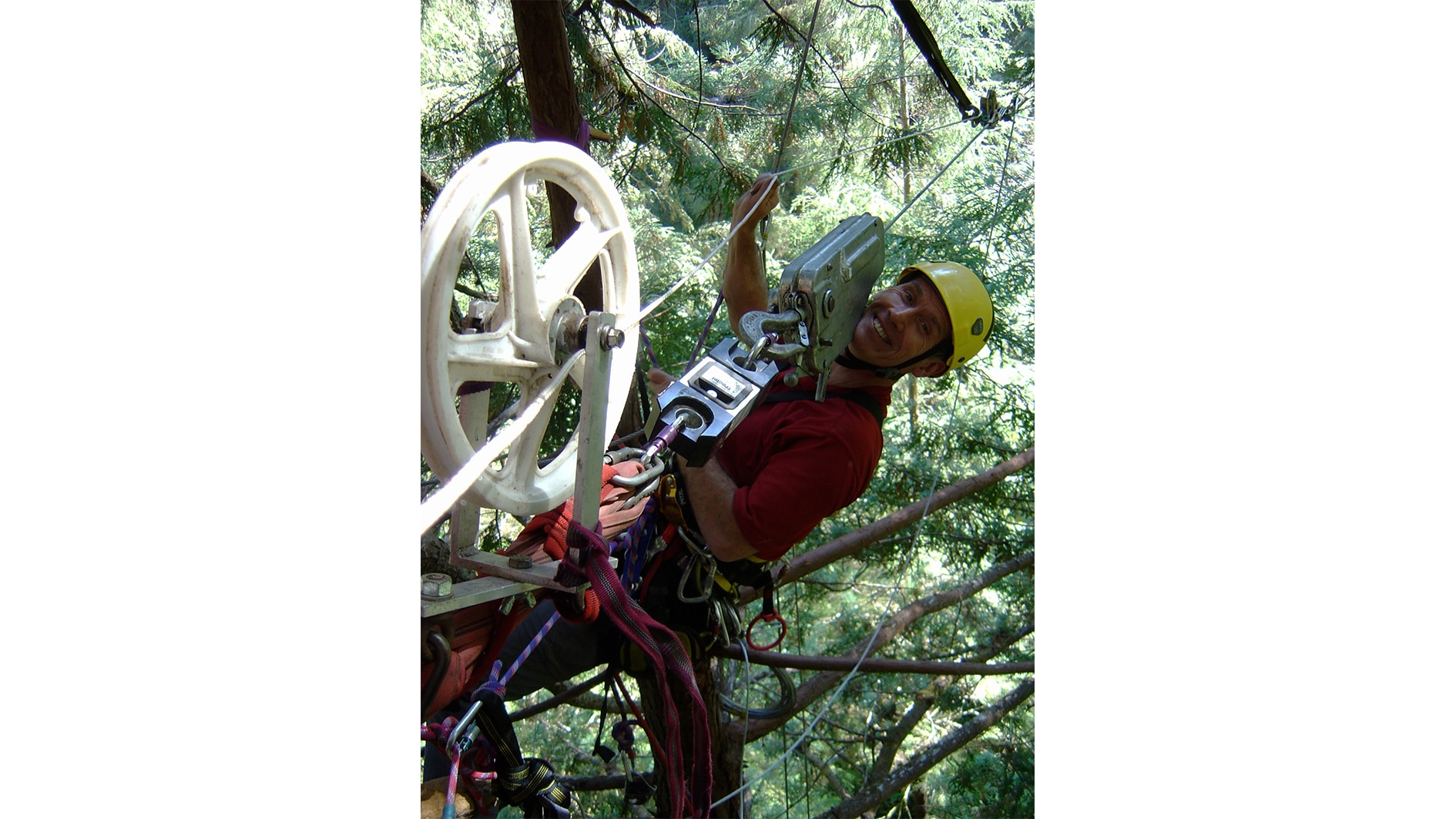
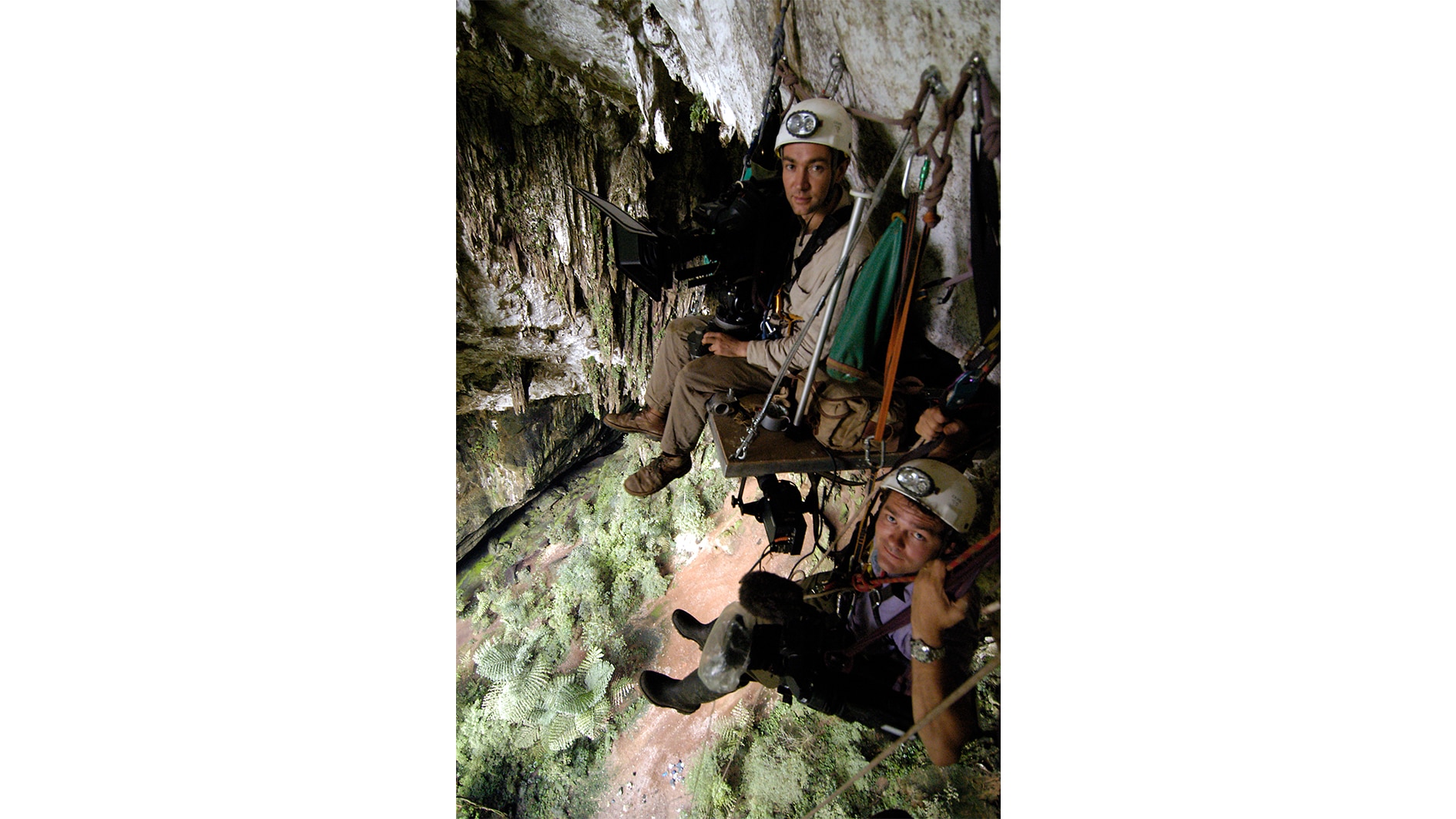
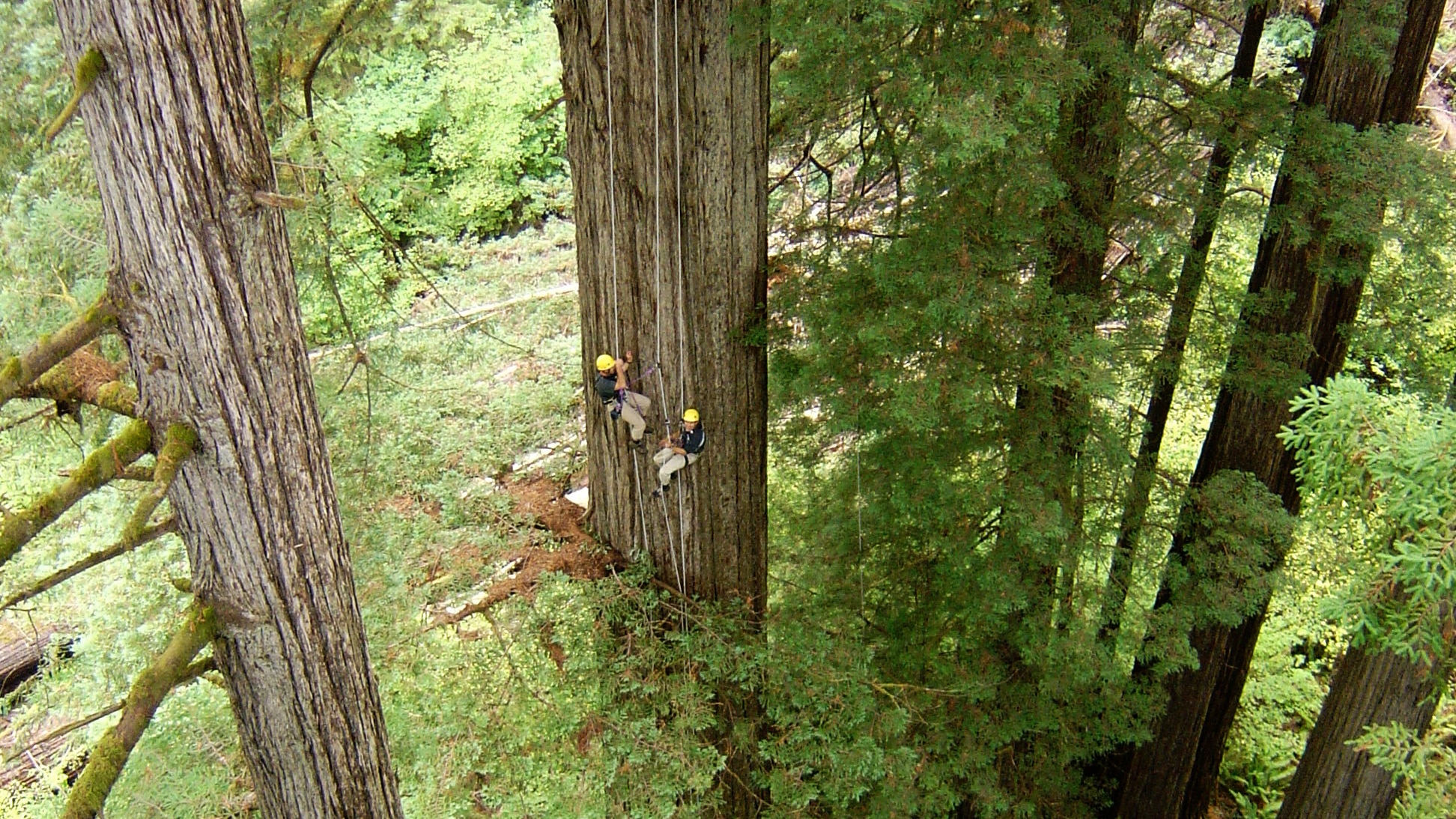
Then there’s Tim Fogg, who helped keep the crew safe on shoots amid often precarious situations. Fogg is a rope access expert who’s rigged camera platforms all the way up California redwood trees and down dark, narrow ice caves in Iceland.

“Some of it is desperately difficult,” admits Fogg. “For example, you can't really climb up [a redwood]. You've got to get a line up above onto a branch. And you do that with a big bow and arrow. You shoot the arrow with a line on it, and it goes over a branch,” which Fogg says can take anywhere from one to 100 shots.

These are just a handful of the experts who were instrumental in bringing Planet Earth to life. If we chronicled them all, this article would be 1,000+ pages long. Showcasing such awe-inspiring wildlife took a village performing a delicate dance, and the result was a series of stories that have kept us riveted for 20 years.

“You can strip everything else away, but we love a good story,” says Evans.

Find out where you can re-watch this ground-breaking series here.