Blue Planet III

Mangrove Mudflats: Exploring the Habitats of Blue Planet III

Discover more about the home of scarlet ibis and fiddler crabs, its importance to the local ecosystem, and filming in deep mud for Blue Planet III...

The following is an exclusive extract from BBC Blue Planet III, the official companion book to the television series, publishing on hardback and ebook from 5th November. Find out more here.

Mangroves form the forests of the tropical seas. Their dense, tangled roots slow the flow of water to create a sheltered, nutrient-rich habitat that attracts a huge variety of wildlife. Storing even more carbon per unit area than seagrass, mangroves are a vital component of healthy coastal ecosystems.

RESTORING FORESTS 

Mangrove forests create natural barriers against storms and flooding. They also filter seawater, which helps to maintain fish stocks, prevent erosion, and trap carbon that would otherwise enter the atmosphere as carbon dioxide that adds to global heating. This is why conservation efforts are now urgently focused on reforesting areas where mangroves have been lost. In Samut Sakhon, Thailand, these volunteers are replanting thousands of mangroves to restore an ecosystem that has been decimated in recent years by shrimp farming, tourist development, and city sprawl.

“Mangroves capture 50 times as much carbon as the same area of rainforest.”

Blue Planet III
Article continues below
ADVERTISEMENT.
PAGE CONTINUES BELOW
Blue Planet III

More on Nature

Sorry there is no content available for your region.

MUD AND MANGROVES

Time and tide wait for no one on the mangrove mudflats of north-eastern Brazil. In this highly tidal region, water levels rise and fall dramatically over the course of the day. The inhabitants of this dynamic environment must seize their chances as soon as they appear.

“As the tide retreats, it leaves a rich layer of mud and a brief opportunity for a male fiddler crab to acquire a mate. ”

Blue Planet III

At low tide, mud full of algae and tiny molluscs is exposed. This is when fiddler crabs emerge from their burrows to find food, meet mates, and battle rivals – all before the water catches up with them again. But with such a busy to-do list, it’s easy to let something slide. Predators, including the scarlet ibis, are also out to make the most of this window of opportunity.

Blue Planet III fiddler crab
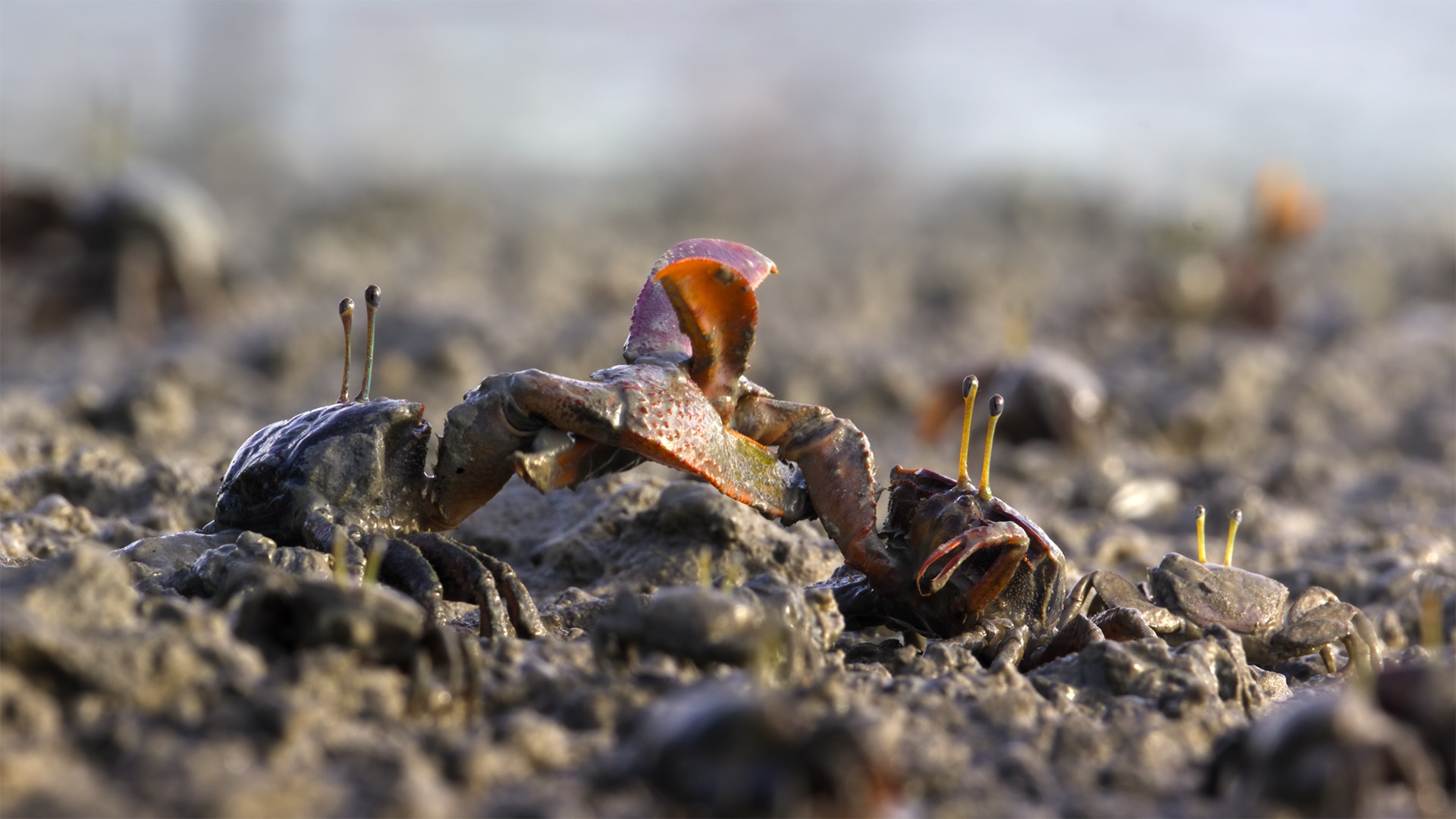
Two fiddler crabs (Uca maracoani) duelling for a mate.

CLAW COMBAT

Male fiddlers use their oversized claw as a weapon against rivals – the Blue Planet III team filmed these two males on the mudflat, too busy fighting to spot a stalking scarlet ibis. The vivid colour of these birds comes from eating up to 100 fiddler crabs per day. If one crab is snatched by an ibis, the other may take the chance to retreat to the safety of its mud burrow.

Blue Planet III Ibis
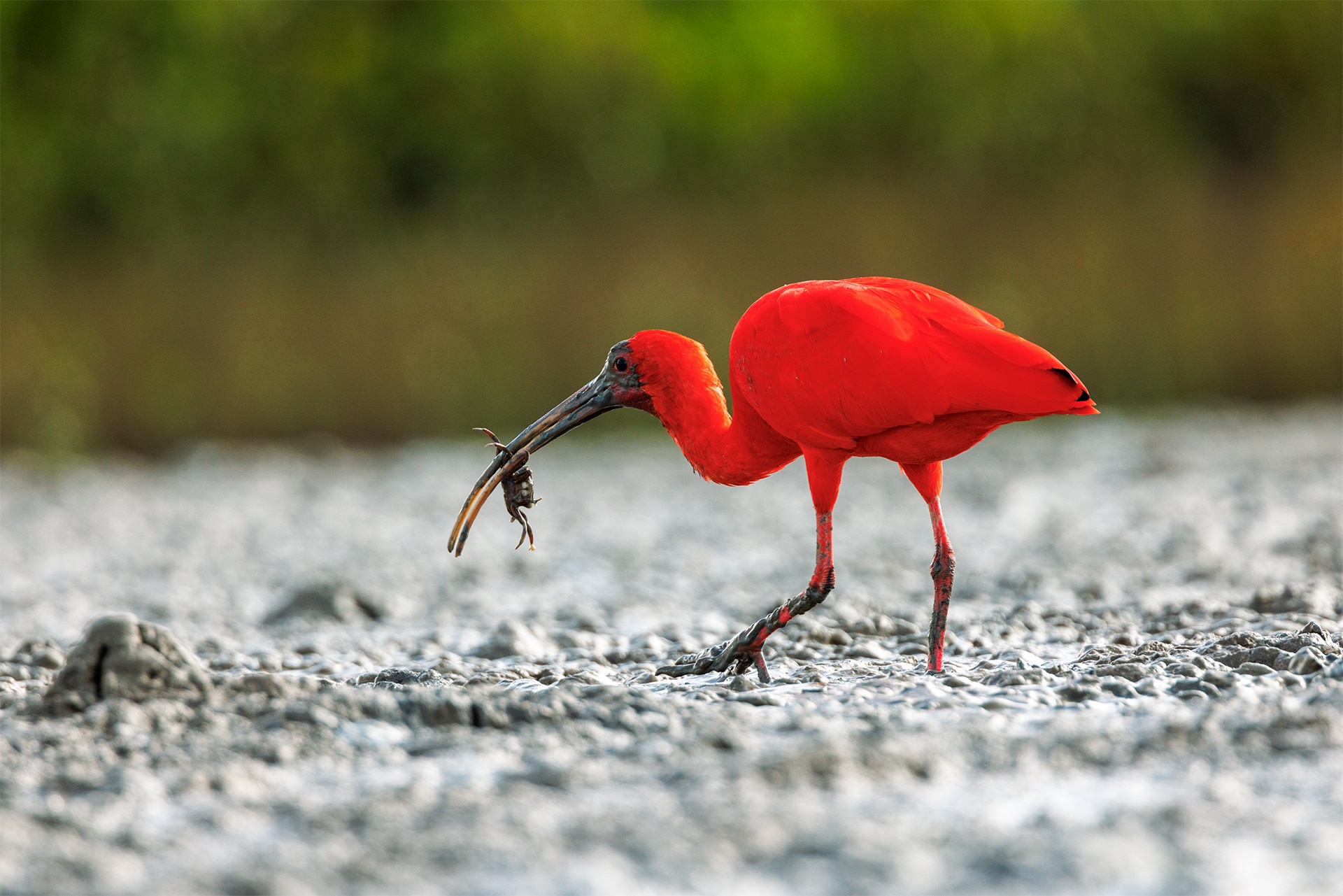
A male fiddler crab captured within the long beak of a scarlet ibis (Eudocimus ruber) on the mangrove mud flats of Brazil - BBC Studios /Shelton Du Preez

DIGGING FOR TREASURE

Hundreds of scarlet ibis gather on the mudflats to feed. Some soar overhead, alert for the slightest movement on the ground, while others stand in wait, ready to catch a crab unawares. The detail above shows how the ibis plunges its whole head deep into the mud, using its probing beak to pluck crabs out of their burrows.

Blue Planet III - filming in mud
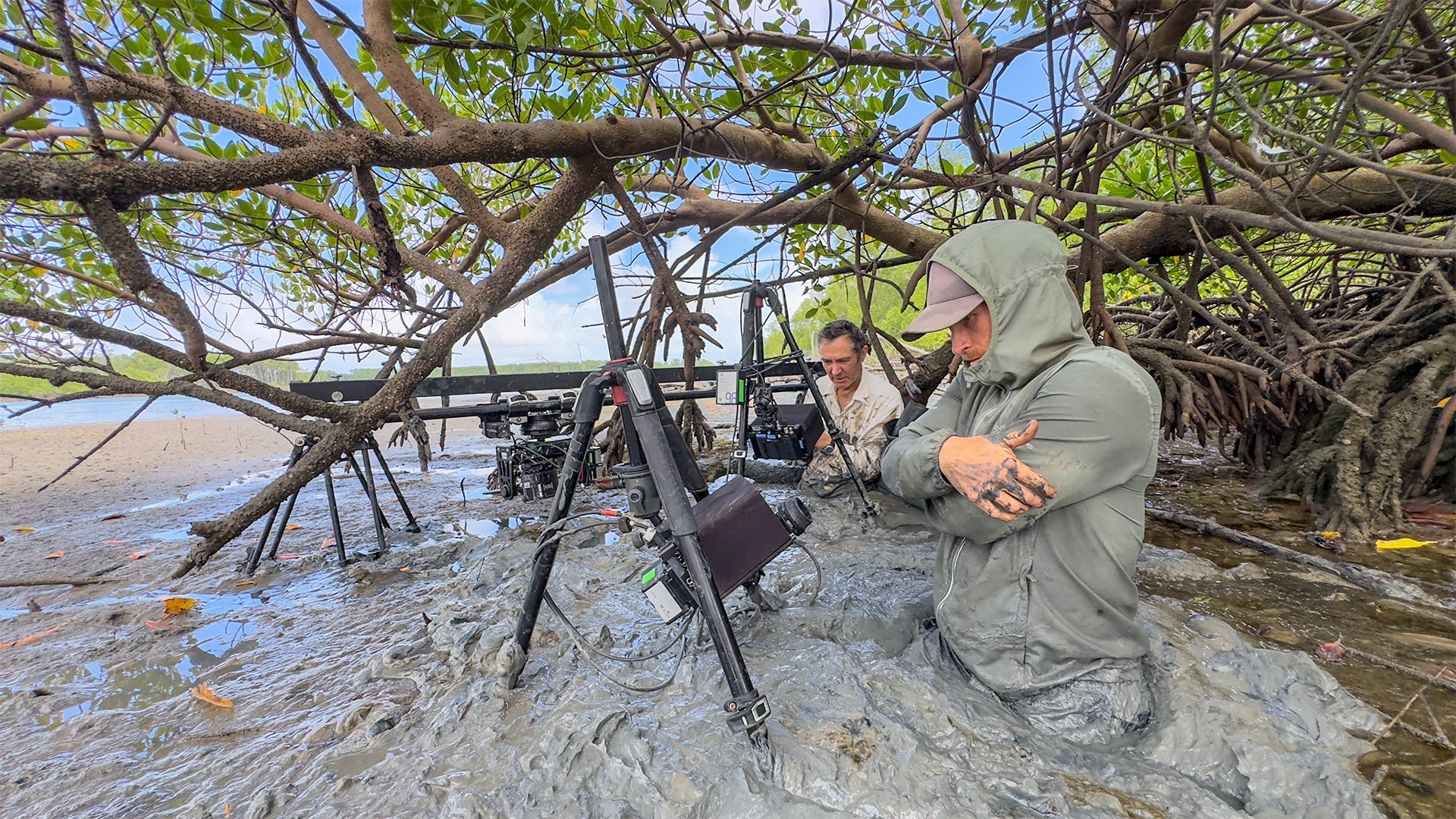
Cinematographers Justin Maguire and Shelton Du Preez patiently wait in waist-high mud to film fiddler crabs for Blue Planet III: Tropical Seas - BBC Studios /Amelia McCarten

BEHIND THE SCENES: STUCK IN THE MUD

For Director Amelia McCarten, filming the Tropical Seas episode of Blue Planet III was a dream assignment – but the reality was less than idyllic. To film the fiddler crabs, cameras and lighting equipment were mounted and carried on specialized sleds to keep them from sinking into the mud. However, the crew had no such luxury, often having to wade chest-deep through slimy pools. Cinematographers Justin Maguire (left) and Shelton Du Preez (right) stood in the mud for hours at a time, waiting to capture the best footage.

Blue Planet III - Coral
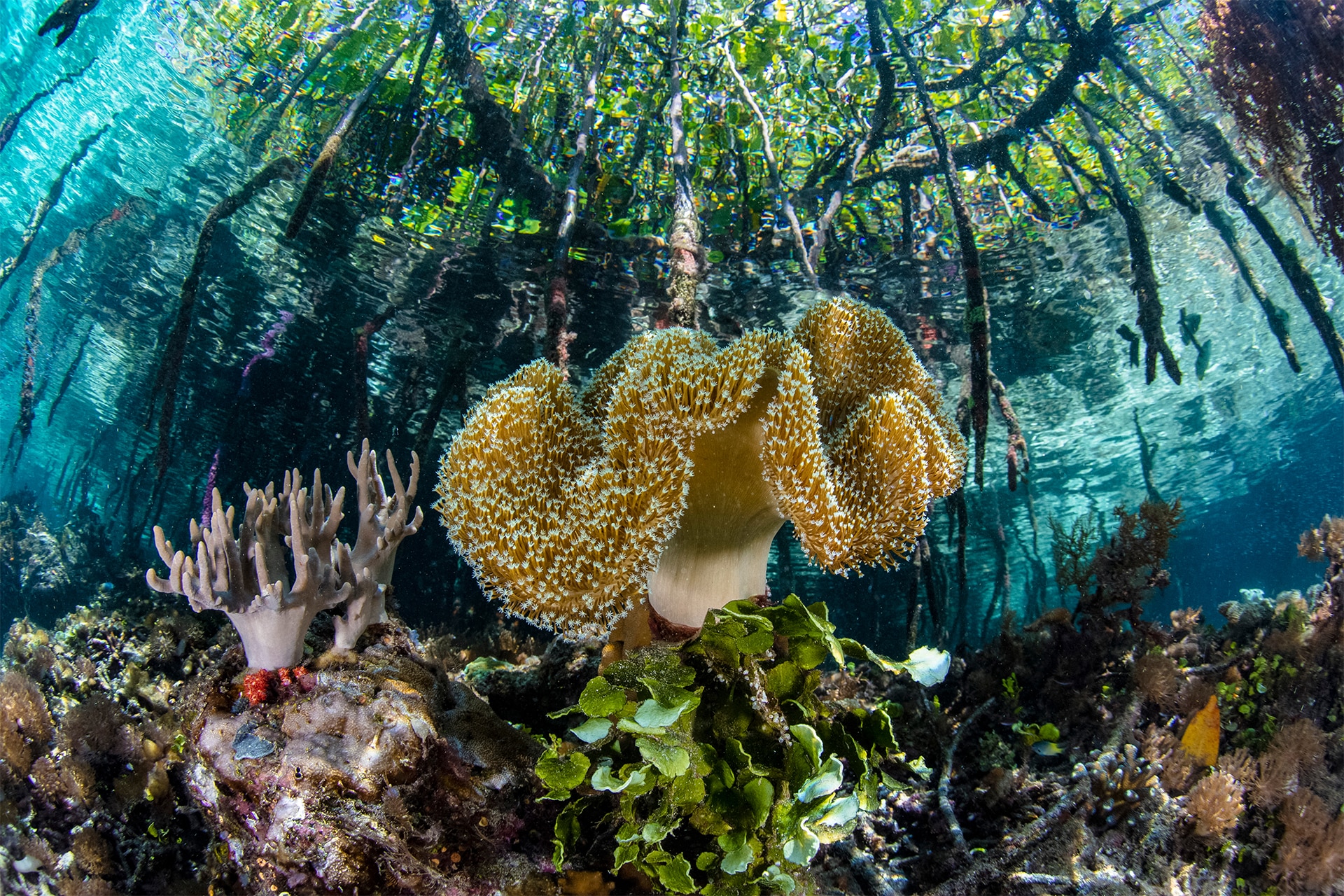
The Coral Triangle in southeast Asia is the richest marine habitat on the planet.

CORAL TRIANGLE

Spanning some 6,000,000 sq km (2,300,000 sq miles) and six countries, the Coral Triangle in southeast Asia is the richest marine habitat on the planet. It comprises four habitats in one: coral reefs, mangrove forests, seagrass meadows, and islands. Although it occupies only 1.6 per cent of Earth’s total area, the Coral Triangle contains 30 per cent of the ocean’s coral reefs and some of the world’s most extensive mangrove forests. 

The close connections between these tropical habitats help sustain an exceptional abundance of marine life. Often referred to as the “Amazon Rainforest of the Seas”, this region is home to three-quarters of all coral species and over 35 per cent of coral reef fish. 

Six of the seven species of marine turtle call this region home, together with blue whales, dolphins, and dugongs. The Coral Triangle supports the livelihoods of more than 120 million people through tourism, fishing, and conservation.

BBC Blue Planet III will be available on hardback and ebook from Thursday 5th November. Find out more here.

Find out where to watch Blue Planet III where you are.