Blue Planet III

The "Puppy-Like" Sharks that Hunt as a Pack

By Ally Hirschlag

A deep dive into the extraordinary feeding behaviour of tawny nurse sharks, as recently explored in Blue Planet III...

Off the northern tip of Australia lie the Torres Strait Islands, an archipelago of coral cays and mountains jutting out of turquoise waters. While walking the beaches, the locals occasionally spot a strange ritual: dozens of sharks dog piling in the shallows.

They’re tawny nurse sharks, long, broad, bottom-dwelling sharks that are “more puppy than predator,” says Yoland Bosiger, a producer director on the Tropical Seas episode, the first of Blue Planet III. The sharks are featured in the opening sequence. 

Tawny nurse sharks are famous for taking their time: they swim about 1.5 mph, more than 20 times slower than a pelagic shark. They also have the slowest metabolism of any shark species, rather poor eyesight, and can breathe without swimming, allowing them to rest on the seafloor for hours on end.

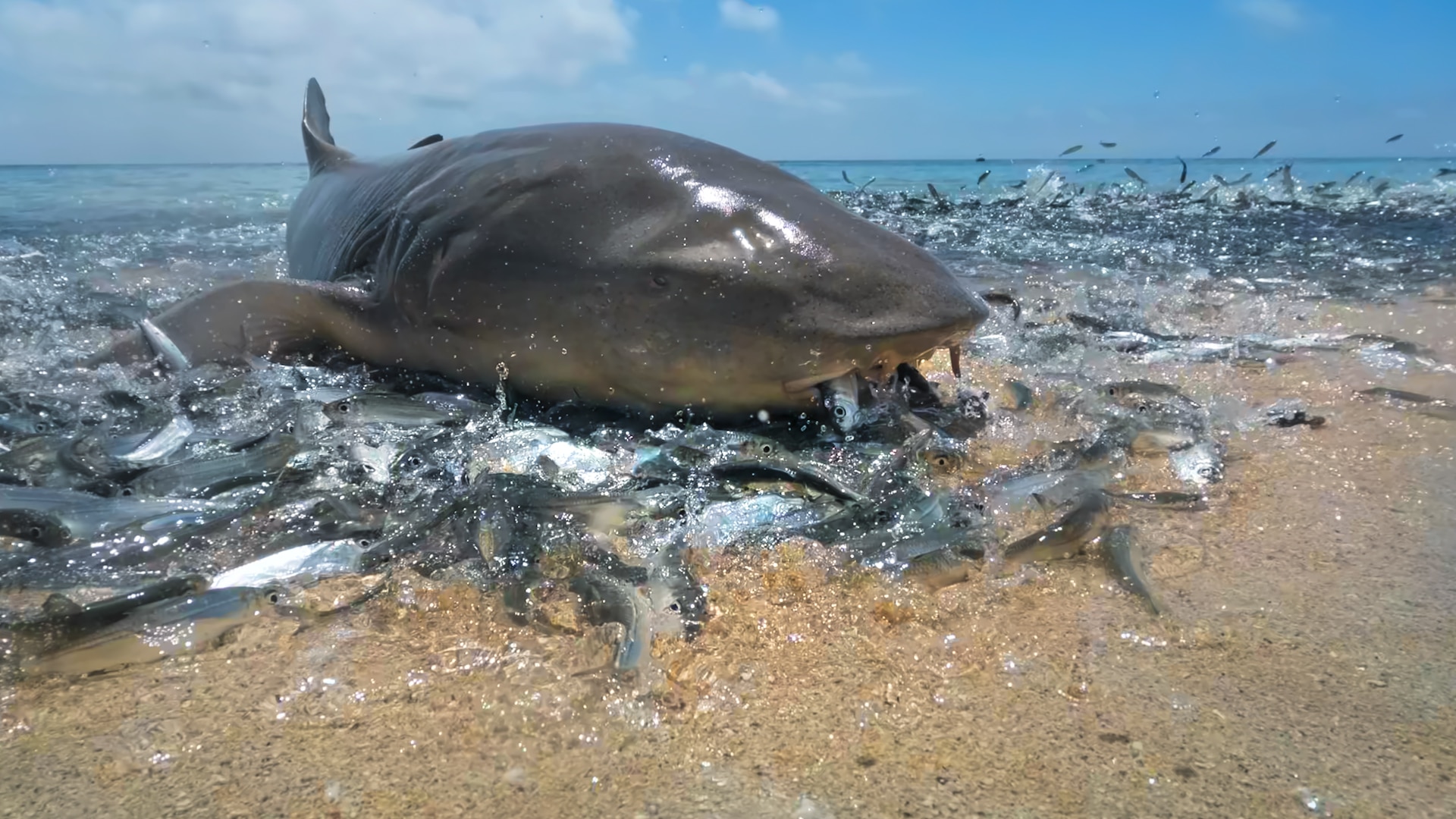
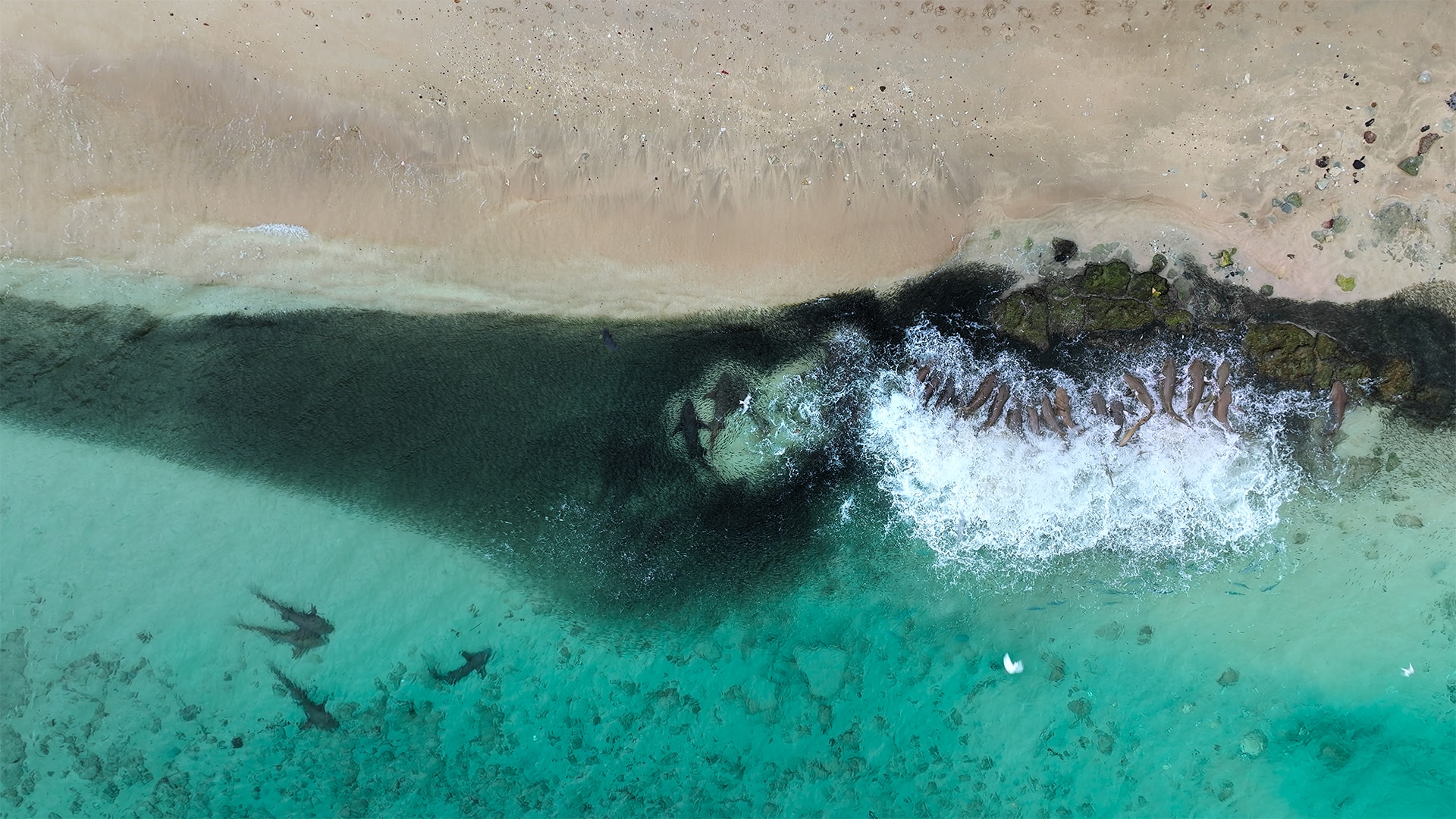
While they might not sound all that formidable, these sharks have learned there’s great power in working as a team. When they gather near the water’s edge, it may look like they’re just resting together, but they’re actually lying in wait for schools of baitfish to swarm around them. Then they collectively plow the fish onto the beach, where they gulp them down in mass quantities. It’s one of the most unique shark-hunting behaviours ever observed. 
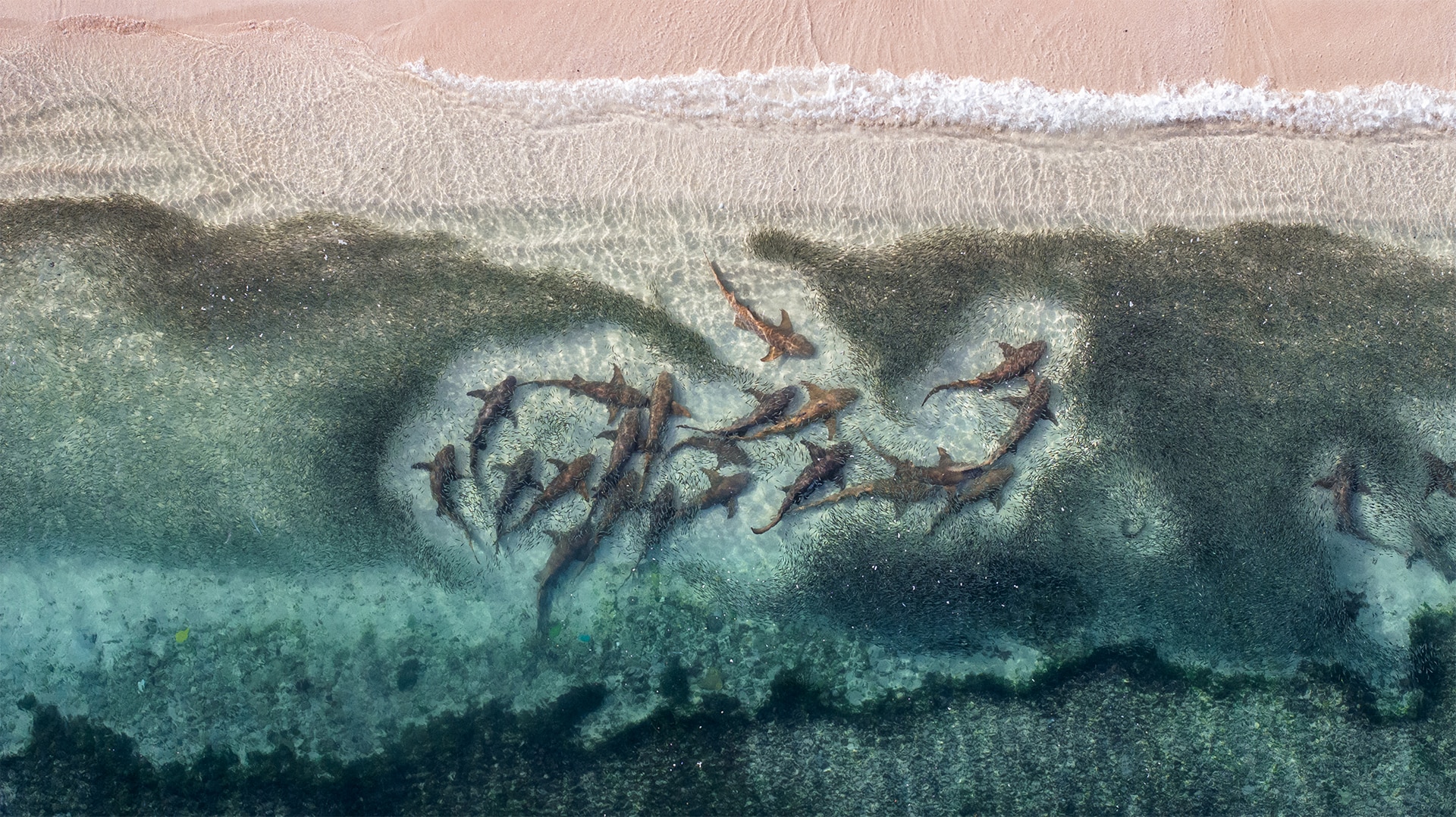
Tawny nurse sharks gather to feed along the shoreline in 'Blue Planet III'.
Tawny nurse sharks (Nebrius ferrugineus) hunting shoals of prey fish in the tropics at Murray Island, Australia
Article continues below
ADVERTISEMENT.
PAGE CONTINUES BELOW
Blue Planet III

More on Nature

Sorry there is no content available for your region.

“There are lots of examples of sharks feeding together: the spawning runs at Fakarava Bay in French Polynesia, or gleaning sardines off bait balls, but this is the only example I can think of where they work as one, coordinating their movement by swimming in parallel to drive the fish onto the beach,” says Steve Simpson, professor of marine biology and global change at the University of Bristol who was a researcher for the episode.

The only reason these sharks were on the filmmakers’ radar was thanks to the indigenous island locals. 

“We saw a number of photos of this behavior, which had been posted [on Facebook] by the local community that lived in the Torres Strait Islands,” Bosiger says. 

After conferring with her cinematographer, Alex Vail, Bosiger went to the Islands to meet with members of the community to learn more. “I just went on the beach with my drone and talked to everybody I could - the fishermen, the kids. And it was amazing because they see this behavior all the time. They have so much knowledge that is not even documented in the scientific literature at all,” says Bosiger.

"There are lots of examples of sharks feeding together...but this is the only example I can think of where they work as one." - Steve Simpson

She was told the tawny nurse shark is the totem animal of some of the indigenous families and is therefore fiercely protected. “They have a very close, personal connection with those animals, and they really respect them,” says Bosiger.

Once the crew arrived onsite, they had to abide by the local customs, which center on respecting the environment and life on the islands. Community leader Falen Passi acted as their guide, as they planned out their shoot. 

“He was particularly in touch with the natural world and so passionate about sharing that with us,” recalls Vail. Passy, along with several other locals they met, were deeply familiar with the tides and winds, and knew where and when the shark hunting behaviour typically occurred. 

Behind the scenes of filming the tawny nurse sharks for 'Blue Planet III'.
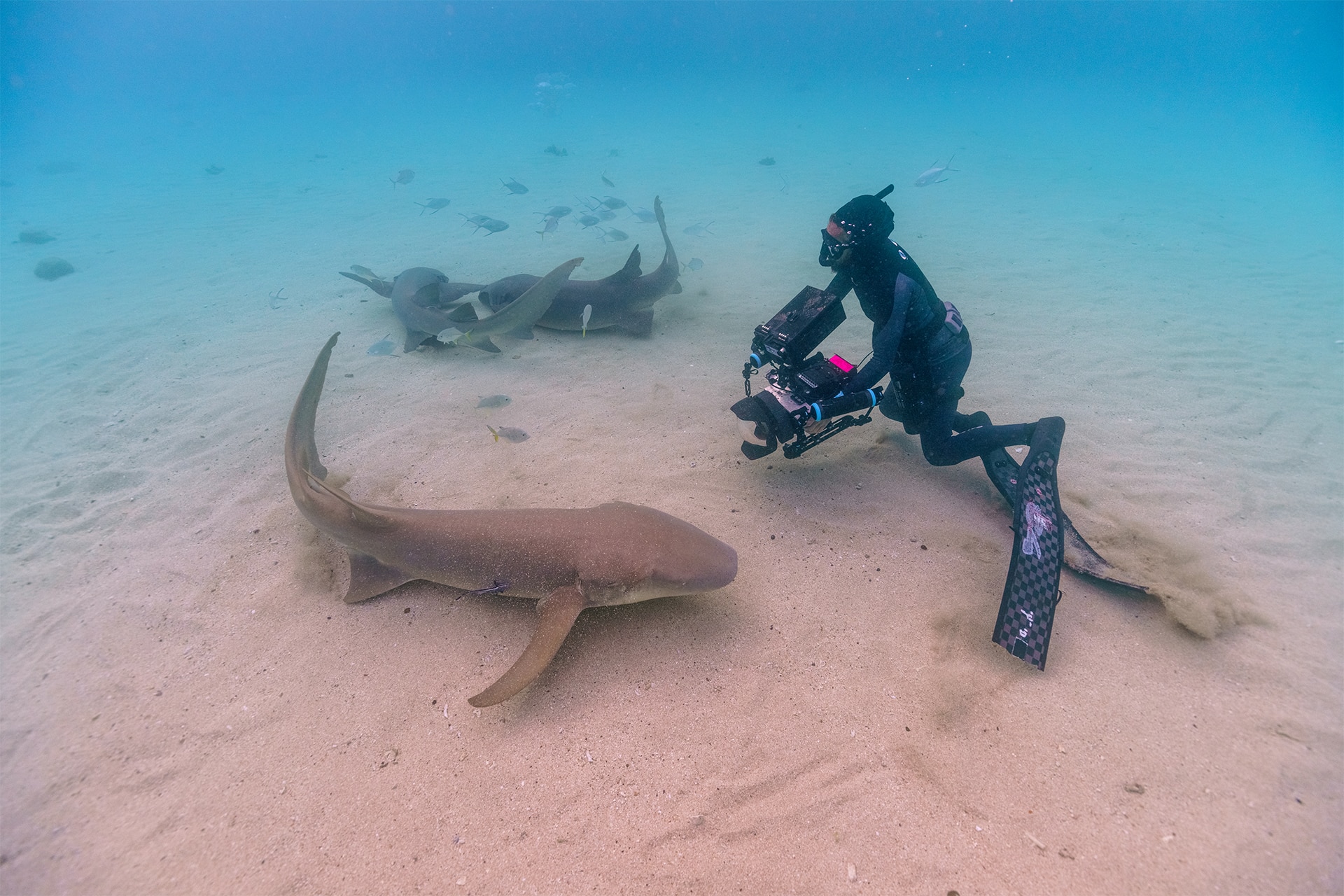
Cinematographer Andre Rerekura films the inquisitive tawny nurse sharks - BBC Studios /Anoushka Freedman

The cinematographic challenge

Those spots the locals pointed to, however, spanned a massive section of the coastline. 

“The behavior could happen over a really long area of beach. It was semi-predictable, but it could pop up anywhere,” says Vail. Using drones as alert systems helped, but sometimes that meant sprinting 500 meters down the beach, lugging heavy equipment to catch the action before it was over. 

The nature of the half-on-land, half-in-water shoot also made for a complex setup.

“It definitely brought its own challenges,” says Vail. “But [it was] also really exciting, because you’ve got these land shots with water going everywhere, with the sharks on the beach. [However you’ve] got to use different equipment for that.”

Behind the scenes of filming tawney nurse sharks hunting
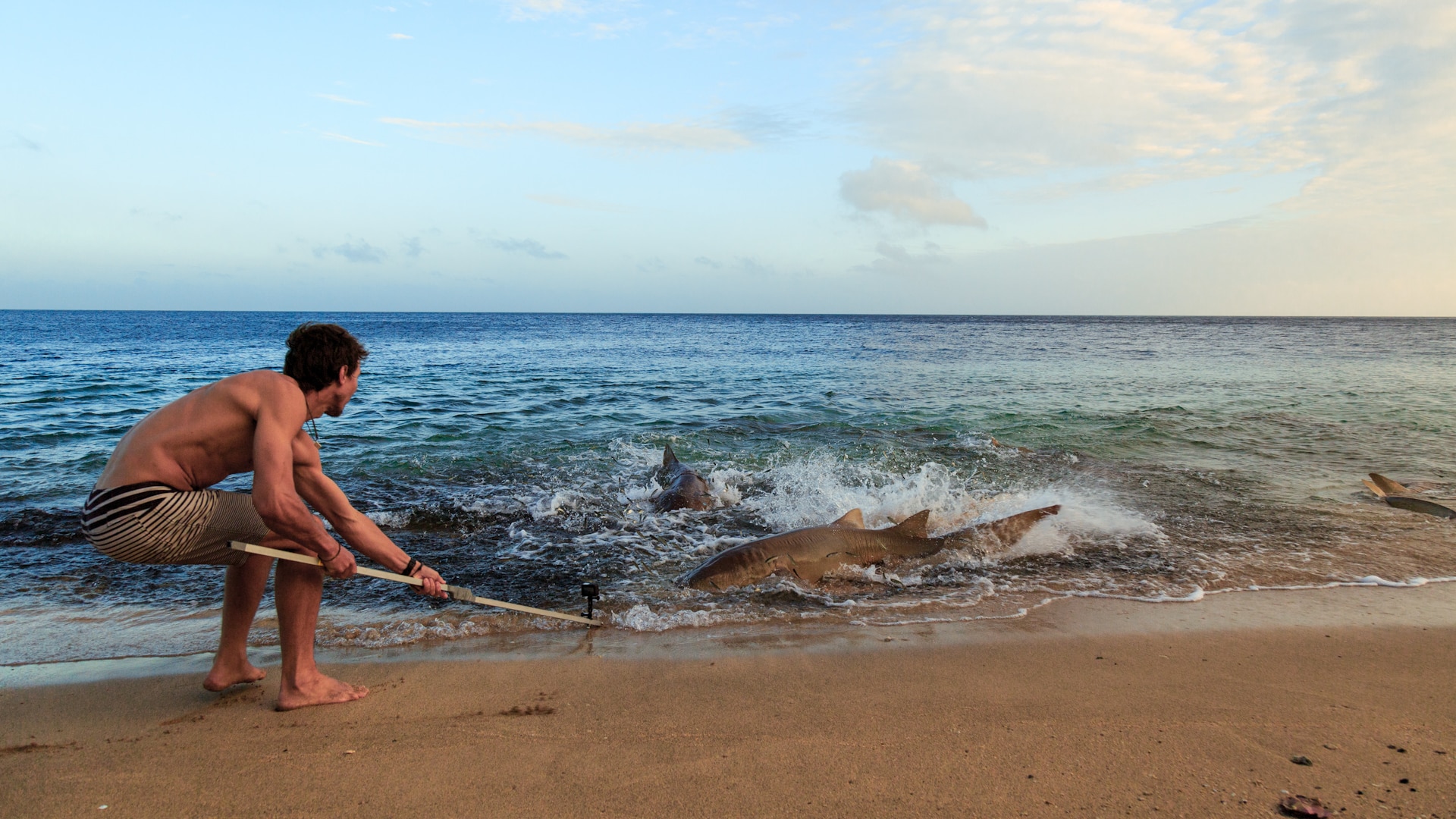
Cinematographer Alex Vail uses a GoPro mounted on a pole to get as close to the beaching and feeding tawny nurse sharks - BBC Studios /Yoland Bosiger

They filmed the in-your-face shots where sharks and fish shoot out of the water using small, waterproof crash cameras specifically designed for high-impact action. They sit at the end of a pole, and the crew positioned them right at the sharks’ eye level to fully immerse viewers in the scene.

“There's bait fish flying everywhere, and then you’ve got the perspective of being one of these little tiny bait fish or another one of the sharks,” recalls Vail.

They used a more traditional long lens camera as well with a 50 to 1000 millimeter lens to get an all-encompassing perspective. A gimbal camera that steadies the shot while a camera person is on the move allowed them to get incredibly close, although they needed to shield it from the sea spray and sand with a plastic bag. 

"You’ve got the perspective of being one of these little tiny bait fish or another one of the sharks." - Alex Vail

Shark safety

Getting that close to a frenzy of sharks might sound dangerous, but these sharks are different. Their teeth look more like those of a short-toothed comb than the large, sharp, triangular teeth you’d see on a great white. They have powerful vacuums for mouths, but they mainly suck up small invertebrates hiding in the sand of the sea floor.

“They're a very easy shark to work with in many ways. Compared to more stereotypical, powerful, bitey sharks,” says Bosiger. “They didn't really seem to notice us when they're out of the water, hardly at all. They just seemed to keep going about their business with us putting these tiny little cameras quite near them when they're on the sand.”

There were faster, competitive lemon and black-tipped sharks feeding on the periphery, but they mostly steered clear of the tawny nurse sharks’ front. “Because of their team hunting behavior, they're pretty much annihilating a whole section of baitfish at a time,” says Vail. “Whereas these other sharks, they'll grab maybe a mouthful of them, but that's about it…it was really the Tawny sharks show because they were there in such huge numbers.”

A tawny nurse shark poses for its close-up in 'Blue Planet III'.
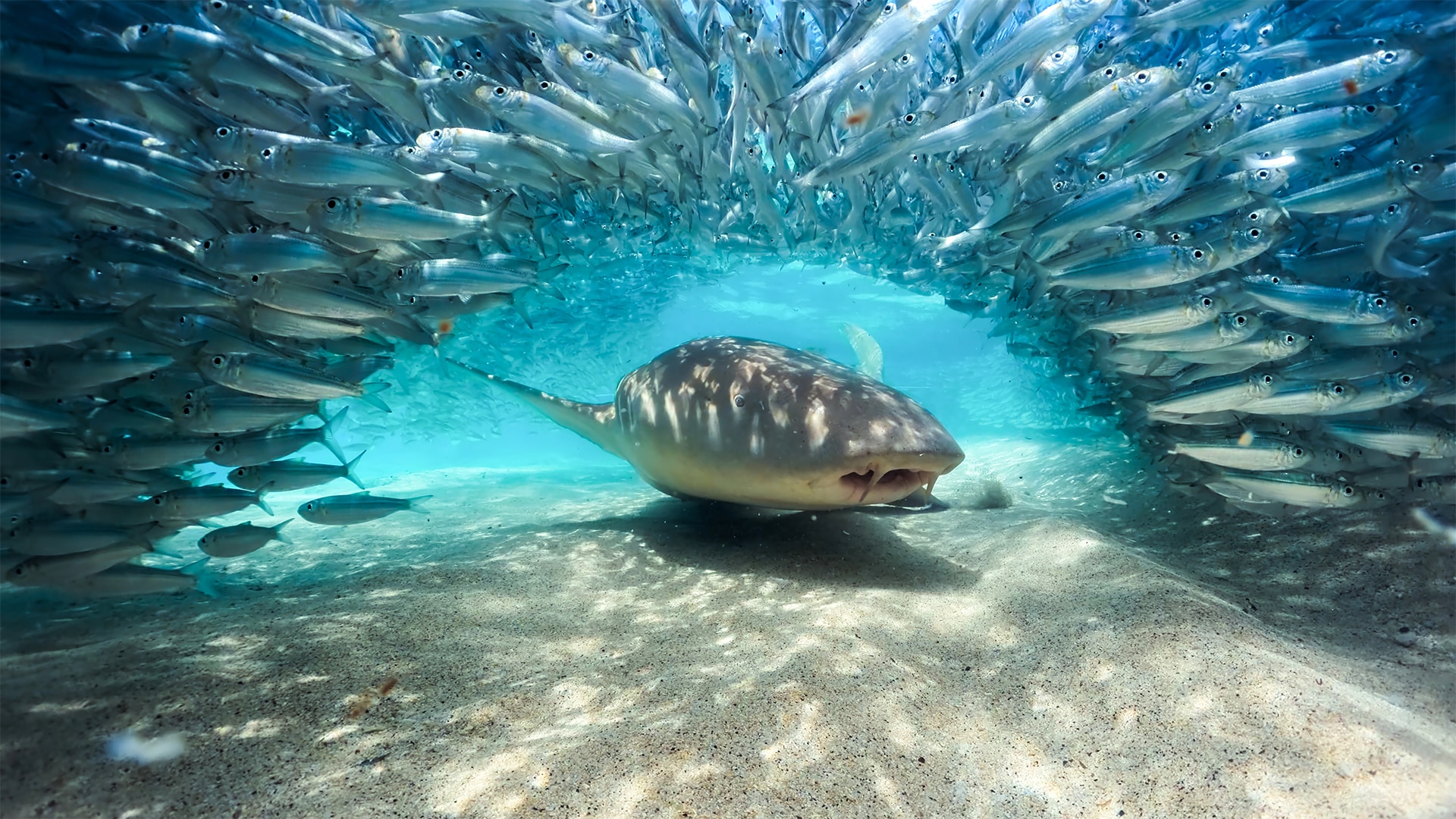
A tawny nurse shark feeds in the shallow tropical waters of Murray Island, Australia, surrounded by trevally.

From above and below

Drones allowed the crew to see just how many sharks they were working with at any given time. Bosiger says there were always at least two drones overhead, scanning the coastline for activity. When they found sharks piling up in one spot, the team on the ground would quickly get into place, while the drones captured the bird’s-eye view. 

“That was a case of sticking on top of them and staying wide, and for goodness sake, not going too close because you don't want all of the sharks to start doing their behaviour, and then you're too close, and you've missed that big, amazing, Mexican wave shot,” says Bosiger.  

The cinematic approach underwater was altogether different. The sharks had particular spots where they liked to congregate before a hunt. Once the team identified them, they placed a few underwater remote cameras there so you could see them as they gathered. 

Bosiger gave a play-by-play: “You'd see one of them just having a little nap, and then you'd see another one come in, straight for the shark that was lying there, graze its pectoral fin over the top of the one that was lying down, as if to say hi. Then you'd see another one, and then another one would come, and another one would come until there was just this big pile of sharks there…And they're almost looking at the camera.” 

“They're a very easy shark to work with in many ways. Compared to more stereotypical, powerful, bitey sharks.” - Yoland Bosiger

Tawney nurse shark feeding on the beach
Tawny nurse sharks appear to hunt as a team, stranding themselves on the beach to capture prey fish.

The unprecedented shot

After about four weeks of filming, they finally got the shot they came for: 40+ tawny nurse sharks hunting in tandem. Right before the attack, they’re as still as can be, lilting gently with the tide, letting the unaware bait fish gather above them. Then, suddenly, they all charge the beach, forcing waves of bait fish onto the sand. The crew just had to hope that the pre-placed cameras caught the action and didn’t get knocked out in the process. 

At times, it seemed as though some of the sharks might beach themselves, but they were built to manage that.

“The sharks are very adept at flipping back into the water, so they don’t get stuck themselves,” says Simpson. 

“Although some of them did get pretty high up on the beach, they are kind of amazing in their ability to use those fins to turn themselves around,” echoes Bosiger. Vail says their tail fin can act as a lever that they flip so aggressively that it almost bends into a “C” shape. 

The event was an extraordinary demonstration of coordination that could never have been captured so completely without a crew of multidisciplinary talents. 

“When you're going for a behaviour that's rare and hard, I’ve found it really useful to have a team that can do a bit of everything,” says Bosiger. “Alex was the main person doing the topside filming, but we were a bit interchangeable. If somebody had the drone up and they desperately needed to feed or go to the loo, we could alternate.”

Beyond that, they all shared a determination to make this unprecedented scene unforgettable. 

Tawny nurse sharks feed en masse during filming of 'Blue Planet III'.
Tawny nurse sharks appear to hunt as a team, stranding themselves on the beach to capture prey fish at Murray Island, Australia

“I've never worked with people who are more interested and more hardworking than the team that was on that shoot,” says Bosiger. “Everyone was always so keen to just keep going; everybody just loves animals so much and is so driven by finding or filming these new behaviours that it wasn't hard to motivate.”

But without the help of the Torres Strait Islanders, none of this would have come to fruition. 

“Without the local community, we would have been in deep trouble,” says Vail. “Tapping into that local knowledge is really important for learning more about the natural world and for capturing these incredible behaviors,” follows Bosiger.

Through all these efforts, Bosiger and Vail hope their sequence will make people want to learn more about these unusual sharks. 

“I hope that people see sharks for the really lovely, really complex animals that they are, and the amazing things that they do, and certainly so far from just mindless eating machines,” says Vail.

“There are so many sharks out there that aren't like that,” says Bosiger. “It's nice to profile one that's got a mouth like a vacuum cleaner.”

Find out more about Blue Planet III and how it was made, as well as where to watch it where you are.